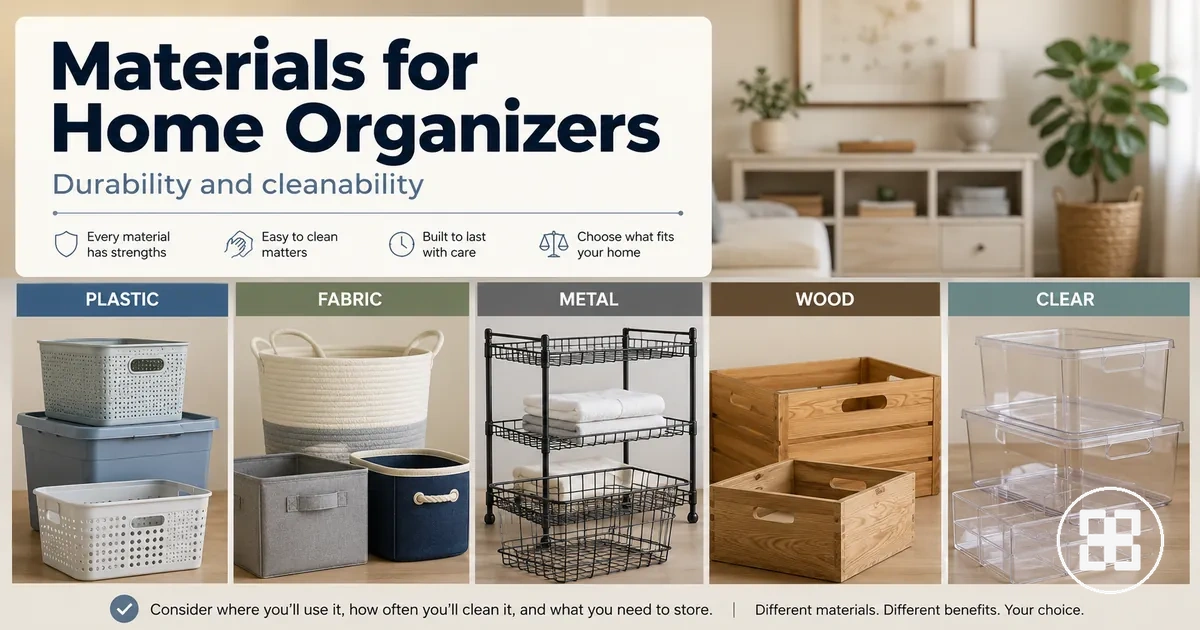
Home organization product materials guide for durability and cleanability
Home organization product materials influence durability, cleanability, visibility, moisture response, and everyday storage performance. Organizer materials such as plastic, fabric, acrylic, metal, and wood have different properties that affect how storage products handle loads, cleaning effort, and storage conditions. Material choice is therefore a key purchase-support criterion, but it works together with size, fit, and access requirements.
For a broader view of storage categories and selection paths, see the home organization products overview .
The suitable material depends on where the storage product is used, what items it holds, and how it will be maintained. For a broader view of storage categories and selection paths, see the home organization products overview. A material that performs well in one condition may be less suitable in another because moisture exposure, item weight, construction quality, and cleaning needs change the practical outcome.
The suitable material depends on where the storage product is used, what items it holds, and how it will be maintained.
A plastic container can be easier to wipe after spills, while a fabric bin can provide lightweight storage for dry items where breathability and flexibility are useful. These differences show why comparing organizer materials by performance factors creates more reliable purchase confidence than choosing a material without considering storage conditions.
- Durability: Material structure, reinforcement, and construction quality influence resistance to regular use and stored loads.
- Cleanability: Surface type and absorbency determine whether a storage product is more suitable for wiping, spot cleaning, or other care methods.
- Moisture response: Materials differ in how they handle damp conditions, spills, and ventilation requirements.
- Visibility: Clear materials such as acrylic improve item visibility, while opaque materials provide less direct viewing of stored contents.
- Storage conditions: Room environment, item weight, access frequency, and maintenance routines affect how material choices perform over time.
Table of Contents
How material choice affects organizer performance
Material choice affects organizer performance by changing practical qualities such as strength, visibility, airflow, moisture resistance, and cleanability. Organizer material is a key attribute because plastic, fabric, acrylic, metal, and wood each create different storage performance outcomes under different storage conditions. These material differences influence how easily items can be stored, accessed, and maintained during regular use.
These material differences influence how easily items can be stored, accessed, and maintained during regular use.
A fabric organizer used for dry clothing storage may prioritise airflow and lightweight handling, while a plastic container used in an area exposed to spills may prioritise a wipeable surface and moisture resistance. The effect of material choice depends on factors such as item weight, moisture exposure, access frequency, and cleaning expectations.
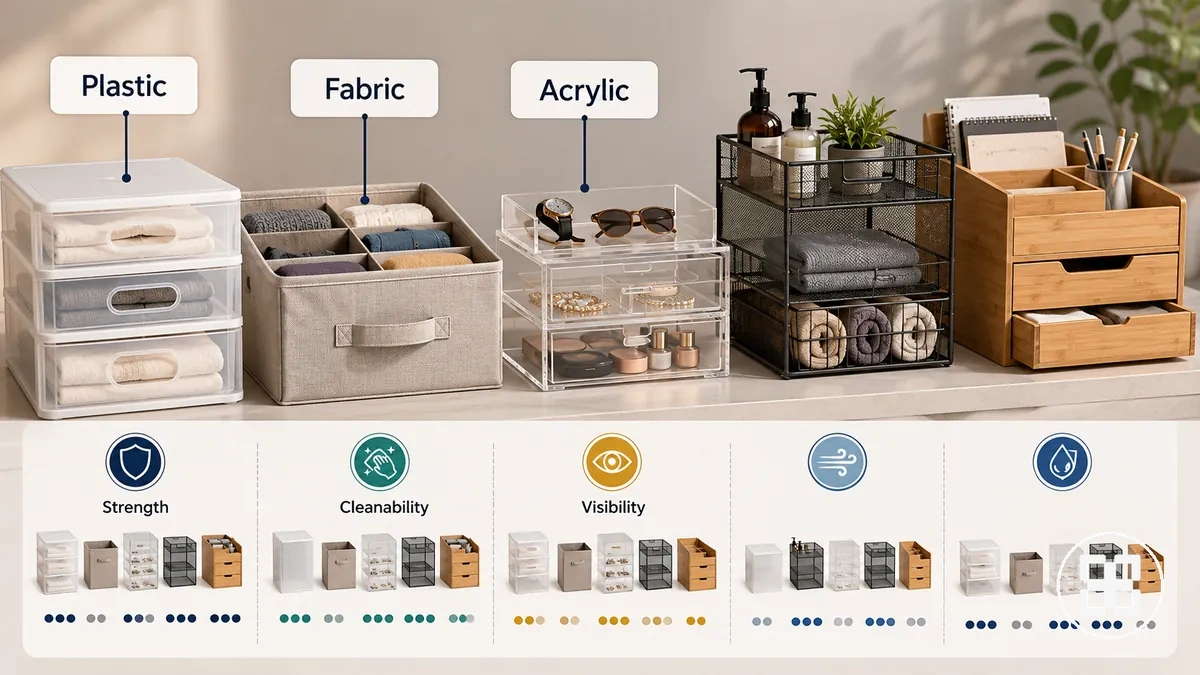
Material performance is only one selection factor because size, room fit, and access requirements determine whether an organizer works in a specific space. For example, a clear acrylic organizer can improve visibility and retrieval of small items, but it still needs suitable dimensions and placement for the storage area.
Material performance factors:
- Strength: Material structure affects how an organizer handles stored loads and repeated use conditions.
- Visibility: Clear materials improve item identification, while opaque materials reduce direct visibility of stored contents.
- Airflow: Fabric materials allow greater air movement than closed solid containers, which can be useful for certain dry storage conditions.
- Moisture resistance: Solid surfaces such as plastic and acrylic are easier to wipe after spills compared with more absorbent materials.
- Cleanability: Smooth surfaces can reduce cleaning effort because residue is easier to remove than from textured or absorbent materials.
Common organizer materials and their practical tradeoffs
Common organizer materials create different tradeoffs in strength, visibility, flexibility, cleanability, and moisture resistance. Plastic, fabric, acrylic, metal, wood, and mixed-material organizers each provide different performance characteristics based on their structure and storage conditions. Material selection therefore requires balancing benefits, limitations, and intended use rather than choosing a single universal material.
Common organizer materials create different tradeoffs in strength, visibility, flexibility, cleanability, and moisture resistance.
A plastic container can support storage conditions where wipeable surfaces and moisture resistance are useful, while a fabric organizer can suit lightweight storage where airflow and flexibility are important. Acrylic can support visibility and retrieval, whereas metal and wood can provide different strength and finish characteristics depending on construction, coating, and exposure conditions.
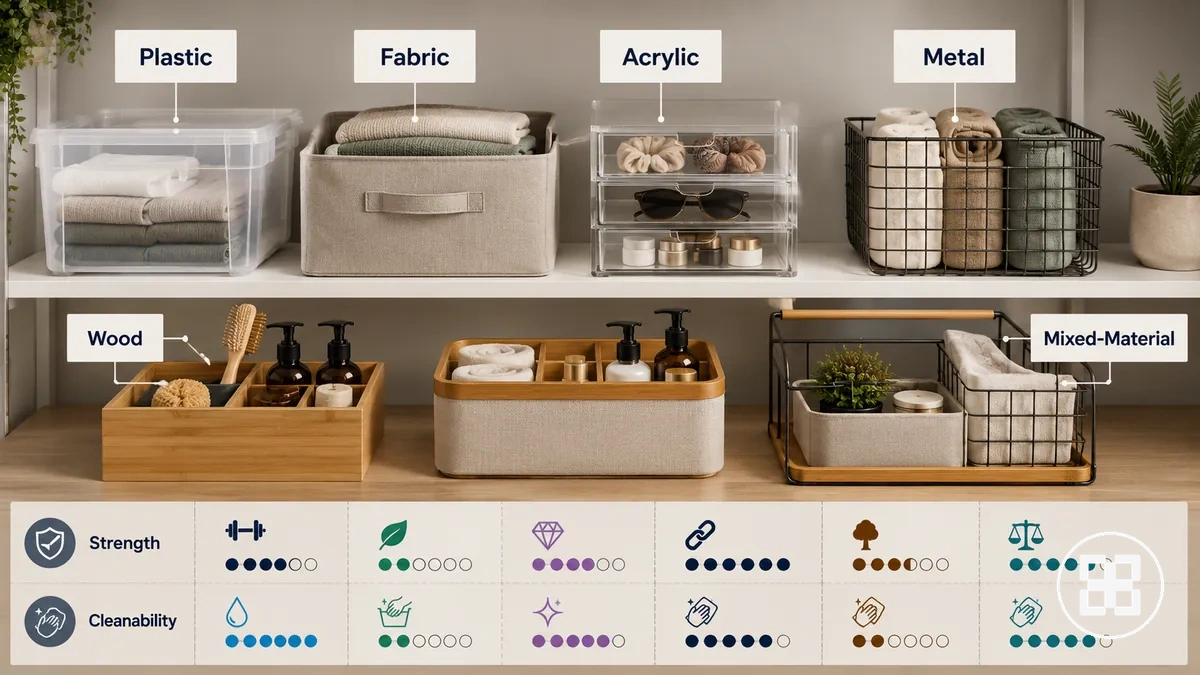
Common organizer materials and their practical tradeoffs can be compared through shared criteria such as strength, cleanability, visibility, moisture behaviour, and best-fit condition. The comparison below focuses on material groups rather than individual products to show how each option handles different storage requirements.
| Material | Strength | Cleanability | Main limitation | Best-fit condition |
|---|---|---|---|---|
| Plastic | Rigid structure suitable for many everyday storage uses | Smooth surfaces are typically easier to wipe and remove residue from | Some constructions have increased cracking risk under impact or unsuitable loads | Storage areas where visibility, wiping, or moisture resistance are useful |
| Fabric | Lightweight structure with flexibility for soft storage applications | Cleaning depends on fabric type, lining, and care requirements | Provides less rigid support than solid materials | Dry storage conditions where airflow and lightweight handling matter |
| Acrylic | Rigid clear structure that supports visible compartments | Smooth surfaces allow straightforward surface cleaning | Clear surfaces can show scratches from repeated handling | Storage where visibility and quick item retrieval are important |
| Metal | Structured support depends on material thickness, joints, and coating quality | Coated surfaces can reduce cleaning effort | Moisture exposure can affect finishes when protection is limited | Storage requiring structured support and open visibility |
| Wood | Rigid structure influenced by material thickness and construction | Cleaning depends on surface finish and sealing | Untreated surfaces can be affected by moisture exposure | Dry environments where finish and structural needs align |
| Mixed-material | Combines properties from multiple material types | Cleaning requirements depend on each material component | Different components may require different care methods | Storage designs needing combined material characteristics |
Material tradeoffs should be evaluated alongside storage conditions, item weight, access needs, and maintenance expectations. A material that improves one attribute, such as visibility or flexibility, may introduce another consideration, such as scratch risk or reduced structural support.
Plastic organizers for moisture resistance and easy wiping
Plastic organizers are useful when moisture resistance and easy wiping are important storage requirements. A plastic surface can provide a wipeable option for removing residue from spills, while rigidity and clear plastic designs can support visibility and structured storage. These benefits are most suitable for storage conditions where surface cleaning and limited moisture exposure are relevant.
Plastic organizers are useful when moisture resistance and easy wiping are important storage requirements.
A plastic storage box in a pantry or bathroom area can suit situations where visible contents and quick surface cleaning are useful. Lid fit influences how well a plastic container limits exposure, but performance depends on the specific closure design, seams, and intended use. Thickness affects rigidity and cracking risk because thinner structures generally provide less support under heavier loads. Plastic organizers should therefore be assessed by surface quality, lid fit, thickness, and construction details rather than material type alone.
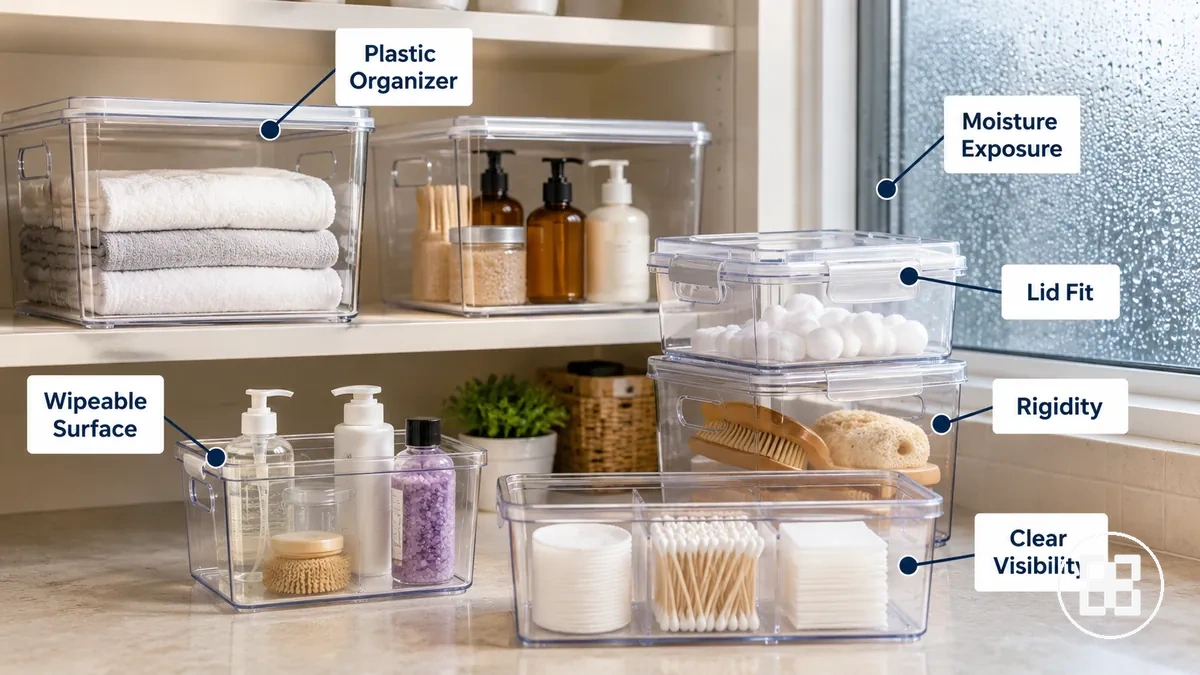
- Surface texture: Smooth plastic surfaces are typically easier to wipe because residue has fewer areas where it can collect.
- Lid fit: A closer lid fit can reduce exposure to dust or spills, but protection depends on the container design.
- Thickness: Plastic thickness influences rigidity, with thinner structures having greater risk of cracking under unsuitable loads.
- Seams and hinges: Connection points can experience repeated stress, making their construction relevant for long-term use.
- Cleaning residue: Plastic surfaces can simplify removal of stains and residue when regular wiping is required.
Fabric bins for lightweight and breathable storage
Fabric bins are useful when lightweight and breathable storage is needed for dry items such as clothing or linens. Fabric organizers provide flexible storage, while reinforced fabric, inserts, and lining can improve shape retention and shelf suitability. Their main tradeoff is that soft structure supports easy handling but provides less rigidity than solid storage materials.
A fabric bin on a closet shelf can support storage where airflow and lightweight access are valuable.
A fabric bin on a closet shelf can support storage where airflow and lightweight access are valuable. Handles can improve movement, while reinforcement and inserts can reduce collapse risk by supporting the bin shape. However, fabric bins are not moisture-proof by default because lining, insert materials, stitching, and care instructions determine cleaning limits and suitable storage conditions.
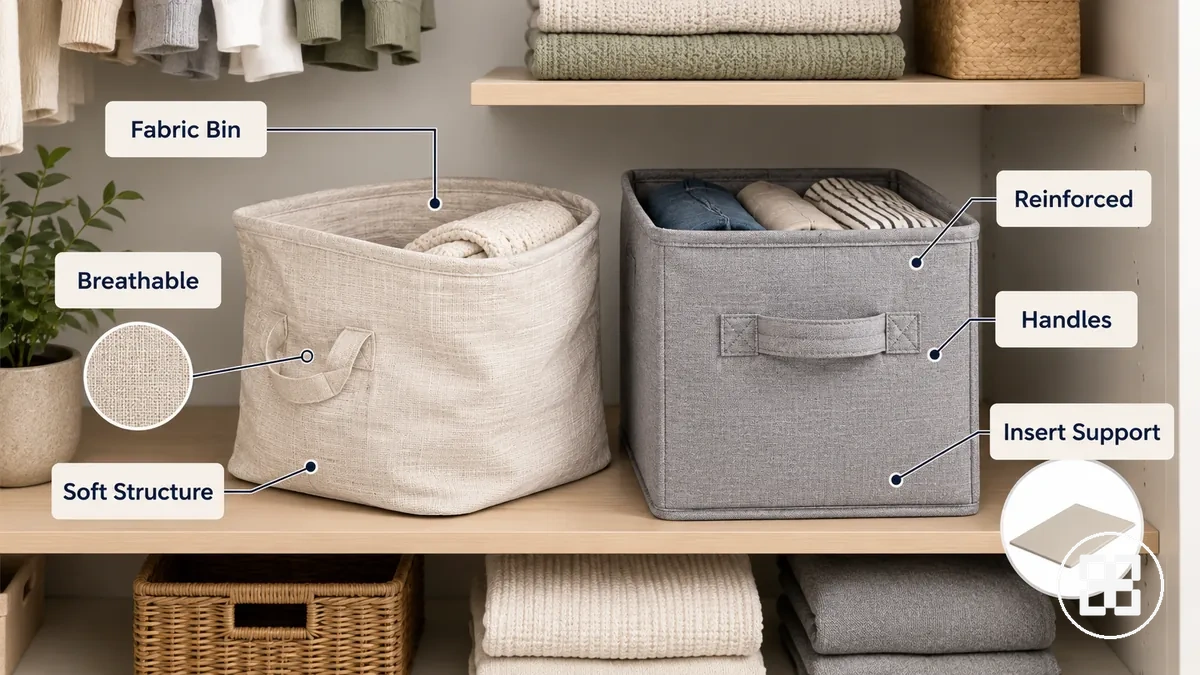
- Insert type: Insert-supported fabric bins can maintain shape better, but insert material affects moisture tolerance and shelf suitability.
- Handle stitching: Handles improve portability, while seams and stitching remain important areas for load support.
- Lining: Lining changes surface behaviour, cleaning limits, and protection for stored items.
- Washability: Fabric bin washability depends on the fabric construction and care instructions, so cleaning methods should be checked before washing.
Acrylic organizers for visibility and rigid compartments
Acrylic organizers are useful when visibility and rigid compartments are important for storage and retrieval. Clear acrylic surfaces allow stored items to remain visible, while rigid compartments help maintain separation and structure for smaller items. These qualities make acrylic organizers distinct from standard plastic organizers when clear visibility and compartment control are the main priorities.
Acrylic organizers are useful when visibility and rigid compartments are important for storage and retrieval.
A clear acrylic organizer in a drawer or on a shelf can make frequently accessed items easier to identify without moving other containers. Wall thickness affects rigidity and brittleness because thinner acrylic structures can be more sensitive to impact and unsuitable loads. Surface condition also matters because scratches, clouding, and cleaning methods can affect long-term visibility and cleaning sensitivity.
- Clarity: Clear acrylic improves visibility and retrieval by allowing stored items to remain visible through the organizer.
- Rigid compartments: Structured acrylic sections help separate small items where fixed organisation is useful.
- Wall thickness: Thickness influences rigidity and brittleness because acrylic structure affects resistance to stress.
- Scratch resistance: Acrylic surfaces require suitable handling because abrasive cleaning methods can reduce surface clarity.
- Cleaning sensitivity: Cleaning methods influence surface condition, especially when maintaining a clear appearance is important.
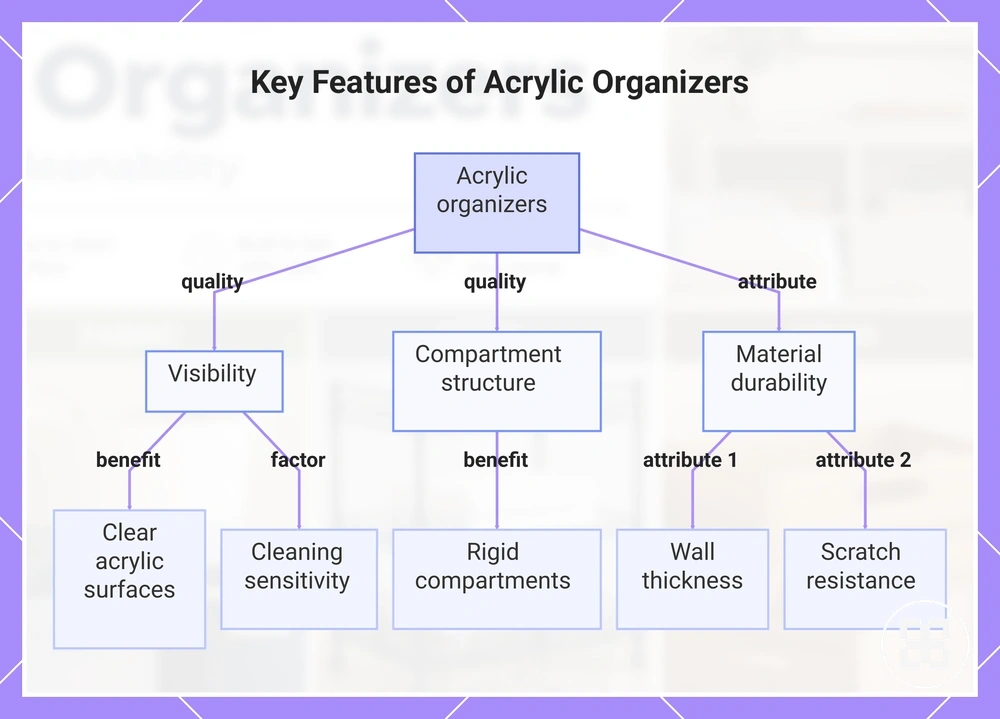
This chart outlines the main qualities and material attributes of acrylic organizers, covering visibility, compartment structure, wall thickness, scratch resistance, and cleaning sensitivity.
Metal and wood organizers for strength and finish
A metal organizer or wood organizer can suit storage situations where strength, structure, or finish are important considerations. Metal organizers are evaluated through factors such as coating, gauge, and joints, while wood organizers depend on finish, sealing, thickness, and joinery. These material behaviours make strength and finish the main reasons to consider these options.
These material behaviours make strength and finish the main reasons to consider these options.
Metal organizers can provide structured support for shelves or visible storage areas, but coating quality and rust resistance influence performance when moisture exposure occurs. Wood organizers can provide rigid storage with a finished surface, but sealing and thickness affect swelling risk in damp conditions. Both materials have different cleaning and weight characteristics, so selection should consider construction quality, moisture exposure, and intended use rather than treating either material as universally superior.
| Material | Strength signal | Moisture risk | Cleaning note |
|---|---|---|---|
| Metal | Gauge, joints, and construction quality influence load support and structural stability. | Coating and rust resistance affect how the material handles moisture exposure. | Metal surfaces are often easier to wipe, but finishes require suitable cleaning methods. |
| Wood | Thickness and joinery influence rigidity and long-term structural support. | Sealing affects resistance to moisture exposure and swelling risk. | Cleaning depends on the surface finish and level of protection. |
Durability signals to check before buying
Durability signals help evaluate organizer construction before purchase by focusing on observable material and build features rather than unsupported lifespan claims. Wall thickness, seams, joints, handles, base support, stacking design, fasteners, coating, and reinforcement provide practical checks for how an organizer is designed to handle use conditions. These durability checks help identify construction signals before relying on appearance alone.
These durability checks help identify construction signals before relying on appearance alone.
Organizers can appear strong while having weak connection points, limited support, or unsuitable construction for their intended use. Inspecting seams, joints, handles, and base structures helps reveal areas that may experience stress during repeated handling or loading. Coating quality and reinforcement also provide useful indicators for surface wear and structural support when moisture exposure or frequent use are expected.
Organizers can appear strong while having weak connection points, limited support, or unsuitable construction for their intended use.
Before trusting durability claims, inspect these construction signals and consider what each feature may indicate:
- Wall thickness: Check the material depth and rigidity because thicker structures may provide more support against flexing under suitable loads.
- Seams: Inspect stitched or joined areas because weak seams can become points of failure during repeated use.
- Joints: Review connection points because joint quality affects how the organizer transfers stress between components.
- Handles: Check handle attachment points because carrying forces can place additional stress on these areas.
- Base support: Examine the bottom structure because stronger support can reduce bending when items are stored inside.
- Stacking design: Look for stable stacking features because poor balance can increase tipping or uneven load distribution risks.
- Fasteners: Inspect screws, clips, or joining methods because secure connections support overall construction stability.
- Coating and reinforcement: Check surface protection and reinforced areas because they can influence moisture response, wear resistance, and structural support.
Cosmetic strength, such as a thick appearance or attractive finish, does not necessarily indicate load-bearing durability. Construction quality, storage conditions, handling frequency, and intended load determine whether an organizer remains suitable for long-term use.
Cosmetic strength, such as a thick appearance or attractive finish, does not necessarily indicate load-bearing durability.
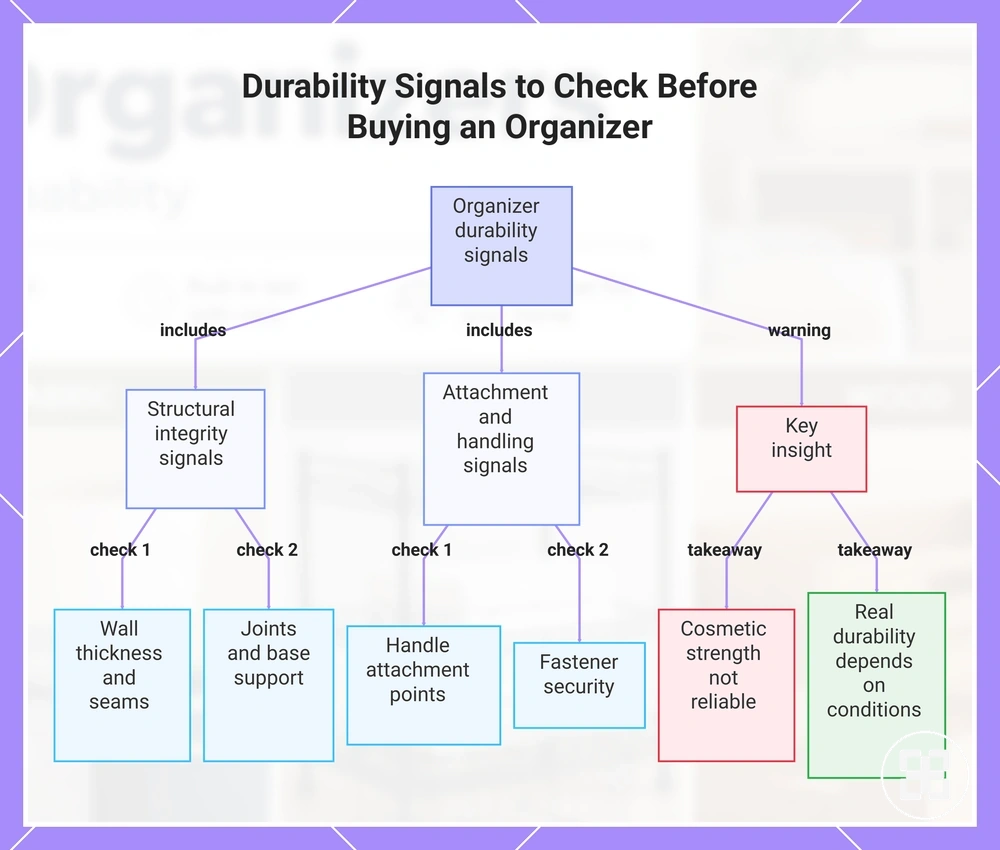
This chart outlines the key construction signals to inspect for durability, plus a warning about misleading cosmetic strength.
Weight capacity, rigidity, and stacking support
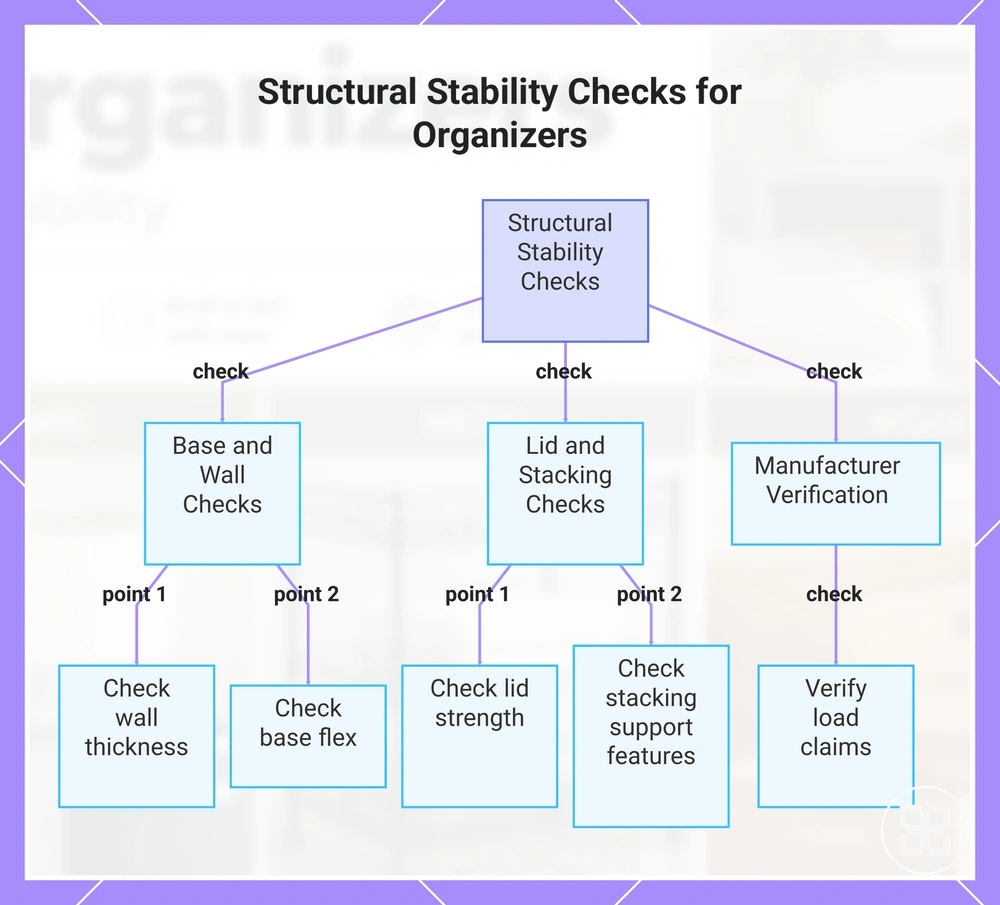
Weight capacity, rigidity, and stacking support are structural factors to check before buying an organizer because they influence how stored items are supported during use. Wall thickness, base flex, lid strength, shelf contact, and stacking design provide observable signals of structural stability. Product-specific load claims should be verified through manufacturer specifications because capacity depends on the organizer's construction and intended conditions.
Checking physical features helps identify whether the construction provides appropriate support for the intended use.
An organizer can appear rigid while still developing sagging, cracking, or instability if its support points are not suited to the stored load. Checking physical features helps identify whether the construction provides appropriate support for the intended use. Stacking support also depends on features such as lid strength, stacking lip design, and stable shelf contact, which can influence tipping risk and stack stability.
An organizer can appear rigid while still developing sagging, cracking, or instability if its support points are not suited to the stored load.
Inspect these structural support signals before relying on appearance alone:
- Wall thickness: Check the material thickness because reduced thickness may allow more flexing when the organizer carries heavier items.
- Base flex: Inspect the bottom surface because excessive bending can indicate weaker support and increased sagging risk.
- Lid strength: Review the lid structure because stacked organizers may rely on lid support to maintain stability.
- Shelf contact: Check the footprint and contact points because uneven support can affect balance and pressure distribution.
- Stacking lip: Look for defined stacking edges because they can help align units and reduce movement during stacking.
This chart shows the key structural checks to perform when evaluating an organizer's weight capacity, rigidity, and stacking support.
Moisture, pests, heat, and surface wear
Environmental exposure can change organizer durability after purchase, so storage conditions should be evaluated alongside material choice. Moisture exposure, pests, heat sensitivity, and surface wear are separate factors that can affect swelling, odour, rust, warping, staining, or scratching depending on construction and placement. These conditions create an environmental exposure frame for understanding durability limits.
These conditions create an environmental exposure frame for understanding durability limits.
Direct protection depends on features such as lids, seals, ventilation, and coating rather than material alone. Moisture exposure can contribute to swelling or rust when materials are unsuitable for damp conditions, while heat sensitivity can increase warping risk for affected materials. Surface wear from abrasion can reduce finish quality through scratches or staining, so environmental protection remains limited by construction and storage conditions.
Direct protection depends on features such as lids, seals, ventilation, and coating rather than material alone.
Check these environmental exposure risks when storage conditions change by room:
- Moisture exposure: Check ventilation, lids, and seals because damp conditions can increase risks such as swelling, odour, or rust depending on the organizer material.
- Pests: Review access points, lids, and seals because closure features may reduce exposure but do not guarantee pest prevention.
- Heat sensitivity: Consider placement and material type because heat exposure can contribute to warping in susceptible organizers.
- Surface wear: Inspect coating and surface condition because abrasion can lead to scratches, staining, or reduced finish quality.
- Ventilation: Evaluate airflow around stored items because limited ventilation can influence moisture-related conditions.
Cleanability differences between washable and wipeable organizers
Washable and wipeable organizers differ in how their cleanability supports different storage conditions. Washable organizers are designed for cleaning methods that involve more water, while wipeable organizers use surface types that allow residue removal with less moisture. The distinction depends on absorbency, inserts, seams, water tolerance, and manufacturer care limits.
Easy-clean materials still require suitable placement, ventilation, and routine care.
A fabric organizer with absorbent material, inserts, or stitched seams may require more drying time and have different odour and stain resistance limits than a smooth plastic or acrylic organizer. Wipeable surfaces can reduce cleaning effort when residue remains on the exterior, but corners, seams, and surface wear can influence cleaning results. Easy-clean materials still require suitable placement, ventilation, and routine care.
Material-level cleanability should be considered separately from ongoing care routines.
Washable and wipeable organizers use different cleaning methods based on material properties and construction. The table below compares common cleanability factors, including surface type, drying requirements, residue risk, and care limits. Material-level cleanability should be considered separately from ongoing care routines.
| Material/surface | Cleaning method | Main limit | Best condition |
|---|---|---|---|
| Fabric | Washable or spot-cleaning methods depend on fabric type, inserts, seams, and care instructions. | Higher absorbency can increase drying requirements and affect odour or stain resistance. | Dry storage areas with suitable ventilation and care conditions. |
| Plastic | Wipeable surfaces support residue removal with surface cleaning. | Scratches, seams, and corners can collect residue or affect cleaning sensitivity. | Storage areas where exterior wiping is useful. |
| Acrylic | Wipeable clear surfaces allow surface cleaning while maintaining visibility. | Scratches and clouding can affect surface clarity over time. | Organizers where visible compartments and retrieval are important. |
For guidance that covers broader care routines after material-level cleanability has been considered, see cleaning and maintenance. Easy-clean surfaces still require suitable placement, ventilation, and routine care to manage residue, odour, and surface condition.
Fabric bins with cardboard inserts or metal frames
Fabric bins with cardboard inserts or metal frames have different cleanability and durability limits because hidden components affect washability, drying time, odour risk, and shape retention. The fabric cover may appear washable, but the insert material, frame material, removable liner, and stitching determine the practical care approach. These internal parts influence how the bin responds to moisture, cleaning, and repeated use.
Check the care label or manufacturer guidance before treating any fabric bin as washable.
A fabric bin with a cardboard insert can maintain shape but has limitations around water exposure because the insert may affect drying time and shape retention after contact with moisture. A metal frame can improve structural support, but frame material and construction affect rust risk and seam durability. Removable liners can change cleaning options, while stitching and handles influence load support and tear risk. Check the care label or manufacturer guidance before treating any fabric bin as washable.
- Fabric cover: Check the outer fabric because washability depends on material type, care limits, and whether the surface is intended for washing or spot-clean methods.
- Cardboard insert: Check the insert material because water exposure can contribute to warping and reduced shape retention.
- Metal frame: Check the frame construction because it can improve support, but moisture exposure may increase rust risk if protection is limited.
- Removable liner: Check whether the liner can be removed because separate components may have different washing and drying requirements.
- Stitching: Inspect seams and handle attachment points because stitching quality affects support, load handling, and tear risk.
Plastic and acrylic surfaces that resist stains and residue
Plastic surfaces and acrylic surfaces are often easier to clean when smoothness supports simple residue removal from the exterior. Wipeability depends on surface type, texture, corners, seams, and the cleaner used rather than material category alone. Hard surfaces can reduce cleaning effort when conditions support regular wiping.
Hard surfaces can reduce cleaning effort when conditions support regular wiping.
A smooth plastic organizer in a pantry or bathroom setting may allow easier removal of residue, but texture, seams, and corners can create areas where dust or stains collect. Acrylic surfaces provide transparency for visibility, but chemical sensitivity, clouding, and scratches can affect appearance over time. These surfaces still require suitable care because easier wiping does not mean stain-proof or scratch-proof performance.
- Smoothness: Check the surface finish because smoother areas can support easier wipeability and reduce residue buildup.
- Texture: Inspect textured areas because deeper surface patterns can hold residue and make stains more visible.
- Corners and seams: Review joins and edges because these areas can collect dust, residue, or cleaning challenges.
- Transparency: Consider acrylic clarity because scratches and clouding can reduce visibility through clear surfaces.
- Chemical sensitivity: Check suitable cleaning methods because some cleaners can affect acrylic surfaces or change surface appearance.
Choosing organizer materials by storage condition
Choosing organizer materials by storage condition requires matching material attributes to moisture, visibility, load, access frequency, and cleaning expectations. The suitable material fit depends on the storage environment, warning signals, and the tradeoffs between protection, access, and maintenance effort. These decision variables help avoid choosing a material based only on appearance.
The storage condition determines which material attribute becomes the priority.
For dry closets, fabric organizers can suit lightweight storage where flexibility and breathability are useful, while rigid plastic or wood options may provide different levels of structure and finish. Damp areas require closer attention to moisture response because plastic surfaces or coated metal may reduce some exposure concerns, while untreated materials can have higher swelling or rust risks. The storage condition determines which material attribute becomes the priority.
Storage conditions involving load, access frequency, and visibility require different material signals.
Storage conditions involving load, access frequency, and visibility require different material signals. Heavier items require attention to rigidity, stacking support, and base support because weak structural signals can increase flexing or instability risks. Visible shelves may benefit from acrylic transparency or wood finishes, while frequently accessed storage may require surfaces that are easier to inspect and clean.
Matching a material to its use condition requires more than comparing features in isolation.
Matching a material to its use condition requires more than comparing features in isolation. Use the selection criteria for organizers when evaluating material-related choices, while keeping moisture, load, visibility, access frequency, and cleaning expectations connected to the decision.
Use the selection criteria for organizers when evaluating material-related choices, while keeping moisture, load, visibility, access frequency, and cleaning expectations connected to the decision.
Use this checklist to match storage conditions with material signals and likely outcomes:
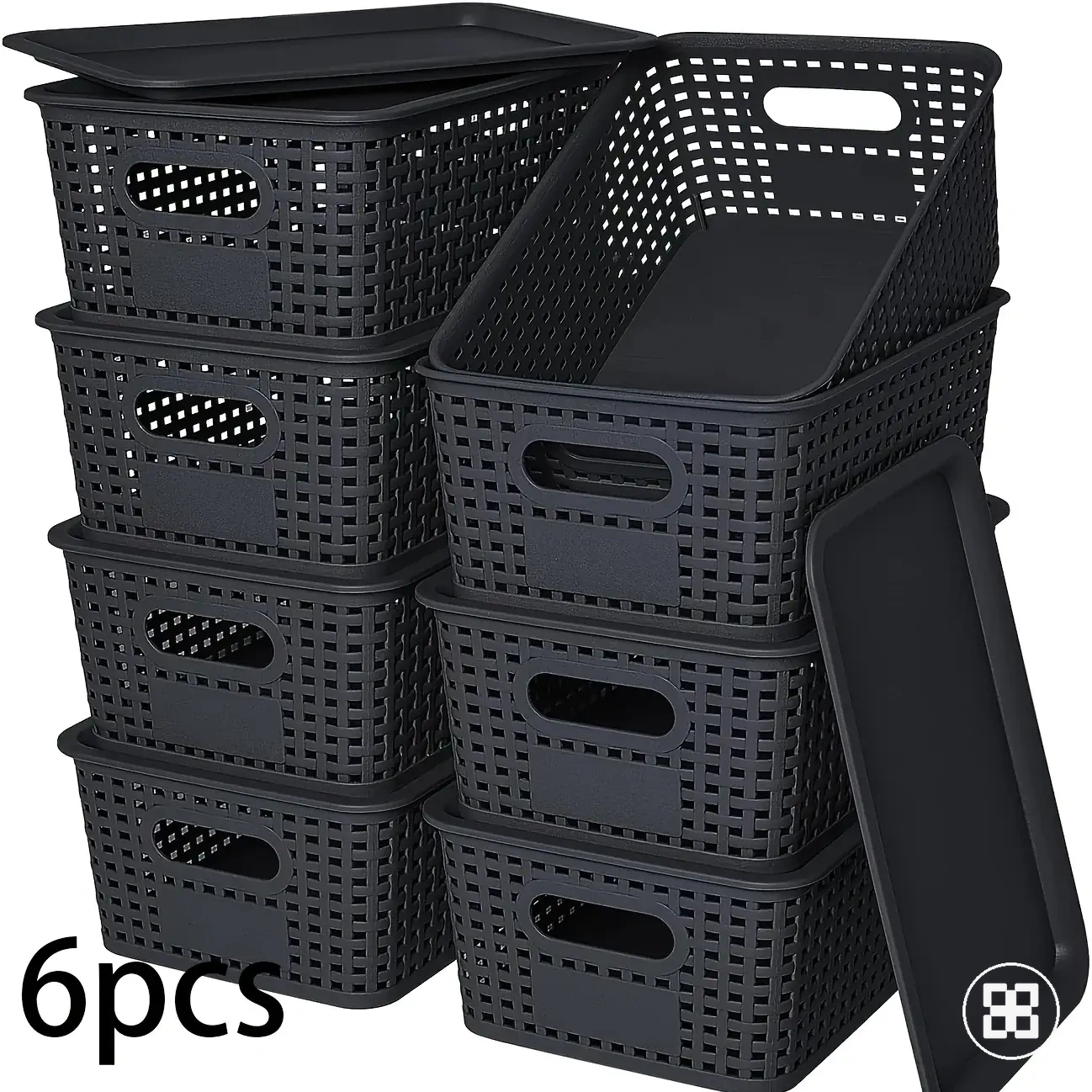
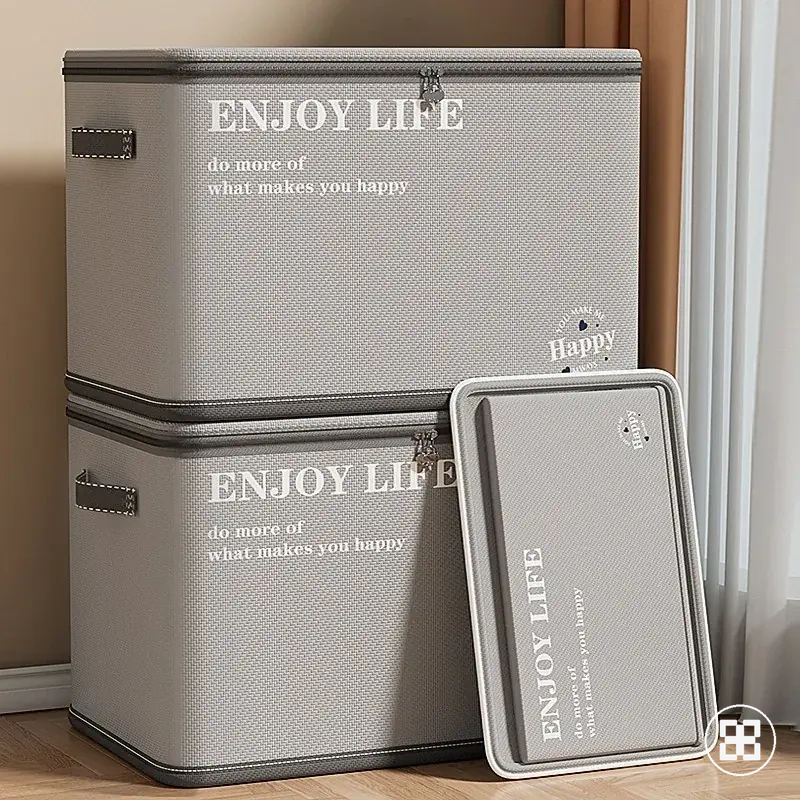
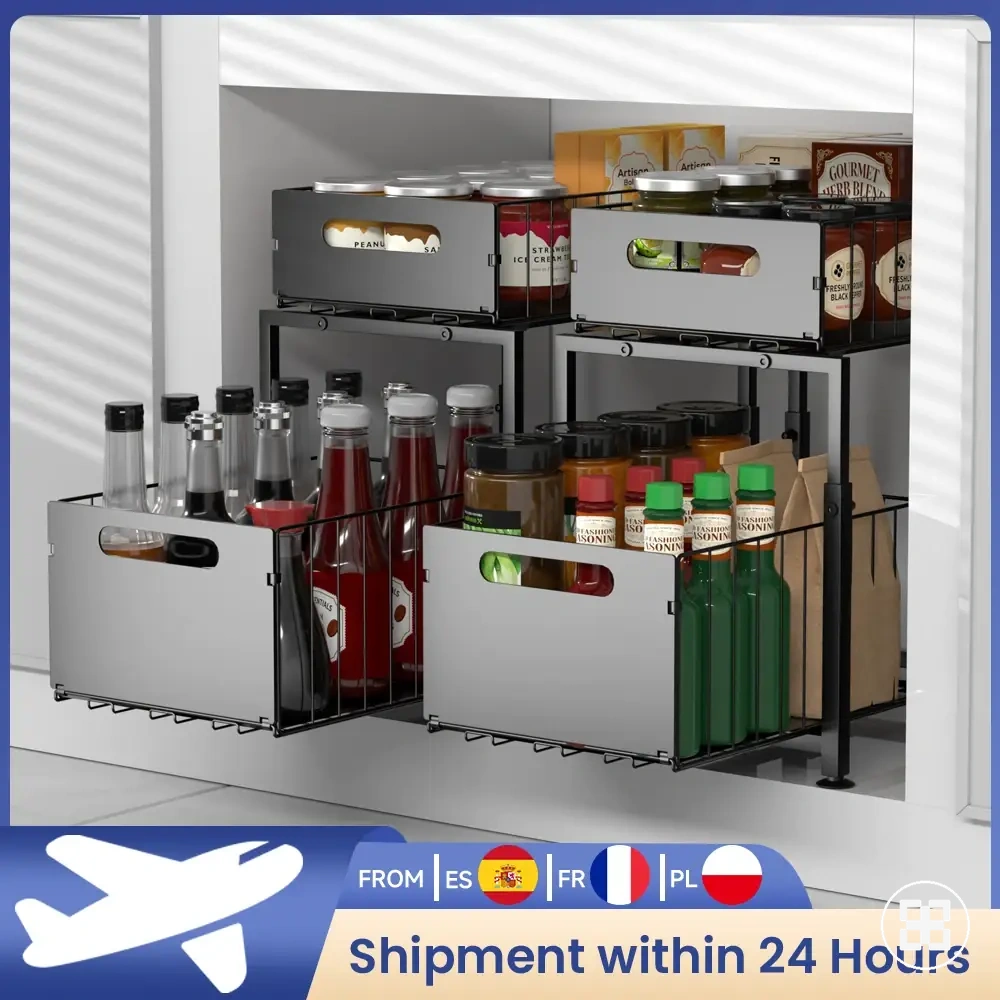
Here are product examples that may make comparison easier.
Here are product examples that may make comparison easier. Before buying, always review the compatibility criteria, essential features, and product details.
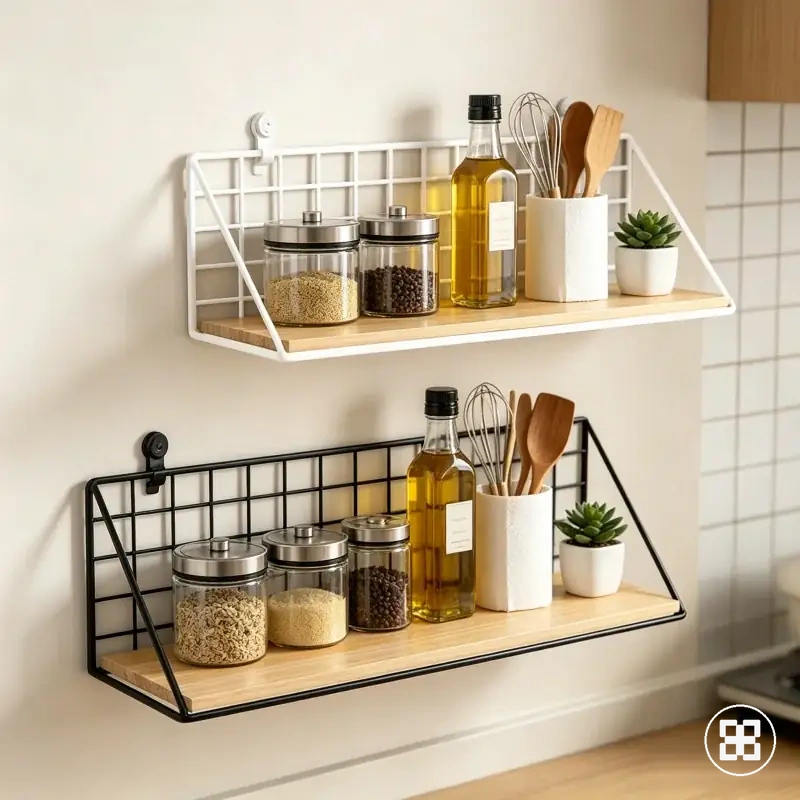
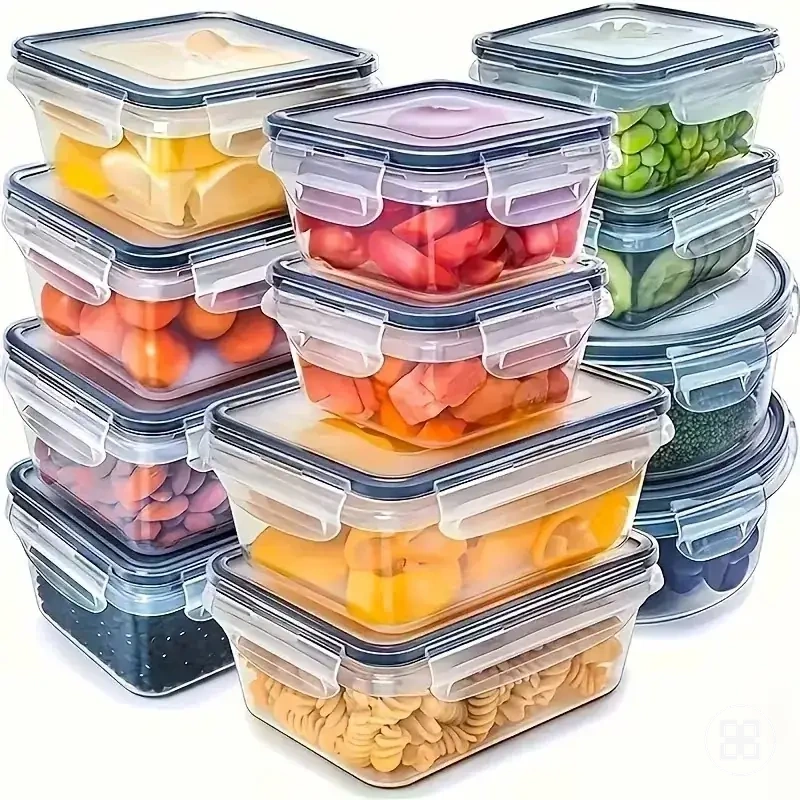
- Damp areas: Check moisture response because plastic surfaces or coated metal may suit conditions where reduced moisture sensitivity is useful, while untreated materials may increase swelling or rust concerns.
- Visible shelves: Check transparency and finish because acrylic or finished wood can support visibility goals, with different tradeoffs in scratches, clouding, or surface care.
- Heavy loads: Check rigidity, stacking support, and base support because stronger structural signals can reduce flexing risks under suitable conditions.
- Frequent access: Check access frequency and surface behaviour because wipeable or easy-to-inspect materials can reduce cleaning effort when residue appears.
- High cleaning expectations: Check washable or wipeable properties because material type, seams, and care limits influence routine maintenance requirements.
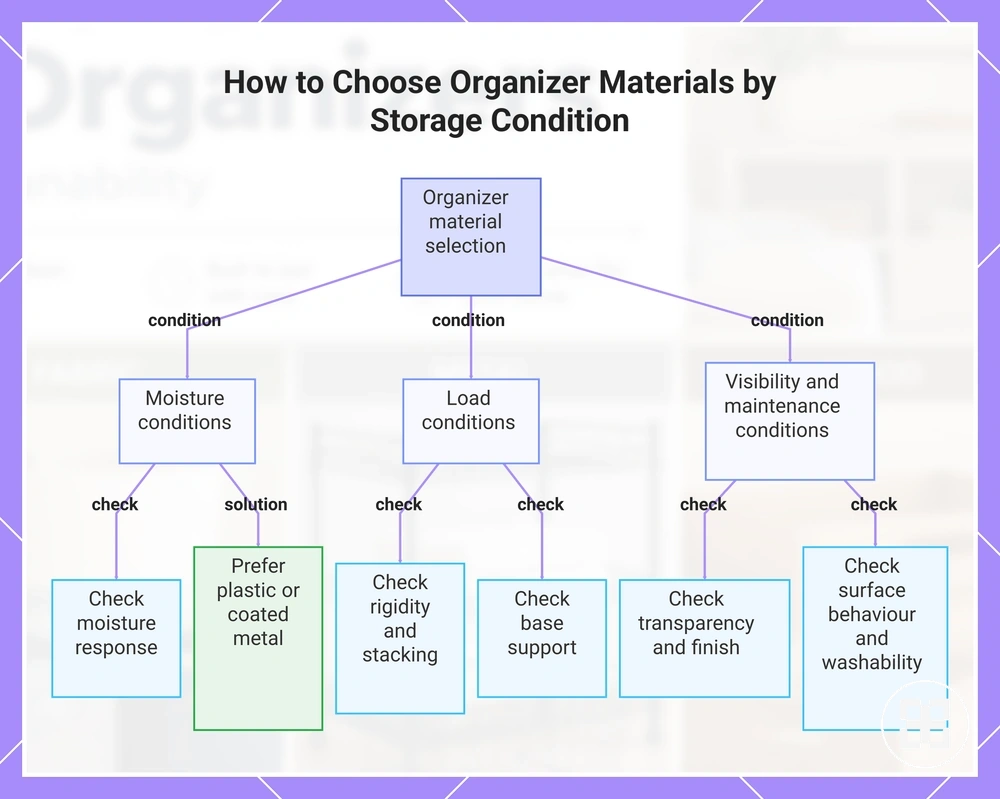
This chart shows the key storage conditions—moisture, load, and visibility/maintenance—and the corresponding checks or recommendations for selecting suitable organizer materials.
Long-term storage, closets, shelves, and visible areas
Long-term storage choices depend on matching material suitability to conditions such as dust exposure, access frequency, load, airflow, and appearance. The right material attribute depends on whether items are stored out of sight, accessed regularly, placed under weight, or displayed in visible areas. These conditions help identify material priorities without treating one material as suitable for every situation.
These conditions help identify material priorities without treating one material as suitable for every situation.
For long-term storage, dust exposure and access frequency can make closed plastic containers useful where lids help limit surface contact, while material choice still depends on inspection and care needs. Closets often require attention to airflow because fabric storage can support lightweight organisation but may need ventilation to reduce odour concerns. Shelves require closer evaluation of load, rigidity, and stacking support because structural limits affect material suitability.
Shelves require closer evaluation of load, rigidity, and stacking support because structural limits affect material suitability.
Material choices for these storage conditions can be evaluated through specific signals rather than appearance alone:
- Long-term storage: Check dust exposure and closure features because plastic containers with lids can reduce dust contact, while limited access may require periodic inspection.
- Closets: Check airflow and fabric behaviour because fabric organizers can support lightweight storage but may need ventilation to manage odour risk.
- Shelves: Check load, rigidity, and stacking support because reinforced plastic, metal, or wood structures may suit heavier storage conditions with different tradeoffs.
- Visible areas: Check appearance and transparency because acrylic or finished wood can support display storage goals, while scratches and surface wear remain material considerations.
Material comparison for value and lifespan
Material value depends on how long an organizer performs under its intended storage condition rather than only its upfront cost. A useful cost-value comparison considers expected lifespan, cleanability burden, replacement risk, and use frequency together. The value equation is the balance between initial cost, ongoing care, and the likelihood of a poor-fit outcome.
The value equation is the balance between initial cost, ongoing care, and the likelihood of a poor-fit outcome.
Low-cost materials can suit short-term storage when use frequency is limited and replacement risk remains acceptable. A lower price tier may provide suitable value when the material matches the expected load and cleaning expectations. The tradeoff appears when frequent handling, residue exposure, or structural demands increase the need for stronger durability signals and construction quality.
Higher use frequency can increase the value of materials that support repeated access and lower cleaning burden.
For longer-use or higher-load storage, material value is influenced by durability signals such as rigidity, seams, surface condition, and construction quality. Higher use frequency can increase the value of materials that support repeated access and lower cleaning burden. However, a higher price tier does not automatically create better value because the storage condition determines whether the added attributes reduce replacement risk.
Material comparison for value and lifespan requires evaluating upfront cost, expected lifespan, and ongoing care together.
Material comparison for value and lifespan requires evaluating upfront cost, expected lifespan, and ongoing care together. The value and durability tradeoffs show why cost-value decisions depend on construction quality, use frequency, and failure risk rather than price tier alone.
The table below compares material value signals across common storage choices.
The table below compares material value signals across common storage choices. These comparisons describe conditional tradeoffs rather than guaranteed lifespan or fixed cost outcomes.
Before buying, always review the compatibility criteria, essential features, and product details.
Here are product examples that may make comparison easier. Before buying, always review the compatibility criteria, essential features, and product details.
| Material | Upfront cost tendency | Lifespan signal | Cleaning burden | Value caution |
|---|---|---|---|---|
| Plastic | Lower to mid cost tendency depending on construction quality | Rigid structure can support repeated use when thickness and design match the load | Wipeable surfaces can reduce routine cleaning effort | Lower-cost construction may increase replacement risk under frequent or demanding use |
| Fabric | Lower cost tendency for lightweight storage | Shape retention depends on fabric construction, stitching, and supporting components | Absorbency can increase cleaning effort and drying requirements | Value depends on whether flexible storage matches the intended condition |
| Acrylic | Mid to higher cost tendency for clear structured storage | Transparency and rigid compartments support visible organisation, while surface condition affects lifespan signals | Wipeable surfaces can simplify residue removal | Scratches or clouding can reduce long-term appearance value |
| Metal or wood | Varies by material quality, finish, and construction | Joints, coating, finish, and structural design influence durability signals | Cleaning burden depends on surface protection and routine care needs | Higher cost may not improve value if the material does not fit the storage condition |
Decision signals should focus on material fit over time rather than price alone. Short-term storage may favour lower upfront cost when replacement risk is acceptable, while frequent use or heavier loads may justify prioritising durability signals, cleaning expectations, and expected lifespan.
Material questions that affect purchase confidence
Material choice depends on the storage condition because durability, cleaning effort, and moisture suitability change by material fit. The right material choice depends on how the organizer will be used, including load, access frequency, and cleaning expectations. These conditions help determine whether a material is suitable for a specific use.
What material choice affects durability most?
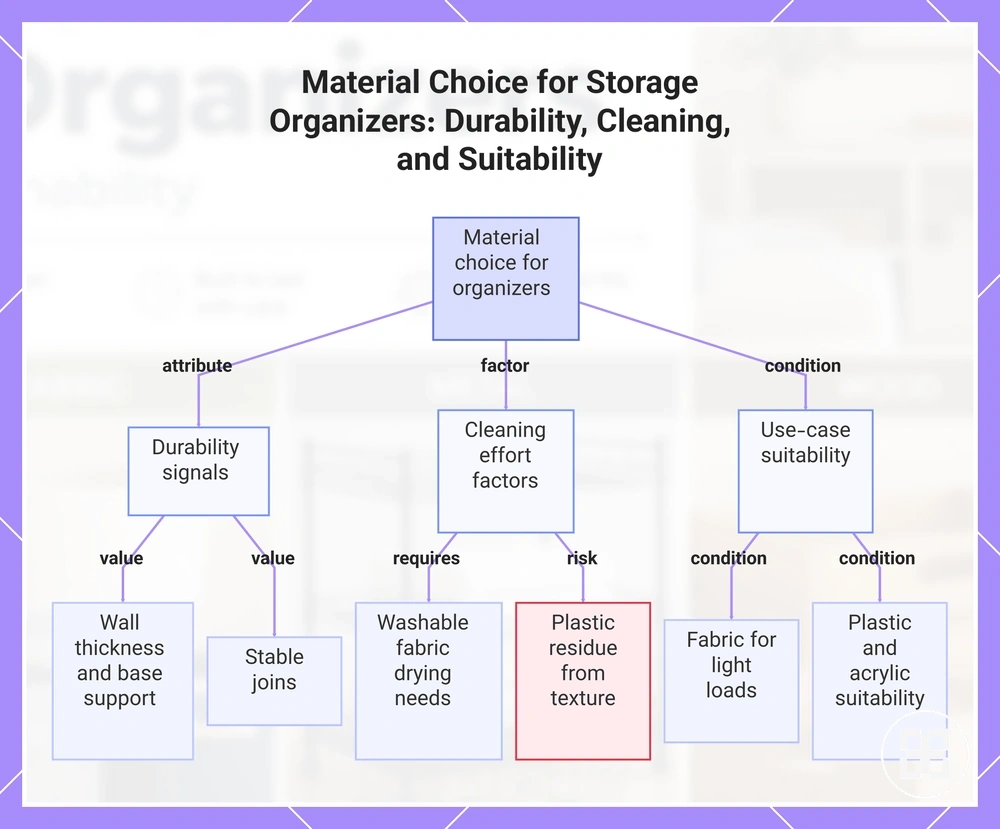
Material choice affects durability through construction quality, load support, and expected use conditions. Heavy-duty storage benefits from durability signals such as wall thickness, base support, and stable joins. The material fit is stronger when the construction matches the storage load and frequency of use.
Is washable fabric always easier to clean?
Washable fabric is not always easier to clean because inserts, seams, absorbency, and the care label affect cleaning effort. Fabric organizers may require suitable drying and ventilation conditions after washing. The care instructions determine whether washing is suitable for that material.
Can wipeable plastic and acrylic surfaces still collect residue?
Wipeable plastic and acrylic surfaces can still collect residue when texture, corners, seams, or surface condition create areas where buildup occurs. Smooth surfaces can reduce cleaning effort, but they do not remove routine care needs. Acrylic surfaces also require attention to scratches and clouding.
Should a clear organizer be chosen for every visible storage area?
A clear organizer can suit visible areas when transparency improves item identification, but material fit still depends on the storage condition. Acrylic provides visibility while requiring care around scratches and chemical sensitivity. A clear organizer is useful when visibility is a priority and surface limitations are acceptable.
Does fabric support heavy-duty storage?
Fabric support depends on construction features such as reinforcement, stitching, inserts, and frame design. Fabric organizers can suit lighter storage conditions, while heavy-duty use requires stronger structural signals such as wall support and base support. The expected load determines whether fabric is a suitable material choice.
Is plastic suitable for moisture-prone storage?
Plastic can suit moisture-prone storage conditions when the material suitability matches the environment. Moisture exposure still requires attention to ventilation, lids, and placement because material alone does not remove storage risks. Plastic can be a practical option when wipeability and moisture response are priorities.
Plastic can be a practical option when wipeability and moisture response are priorities.
This chart shows how material choice depends on storage conditions, covering durability signals, cleaning effort, and suitability for different uses.