
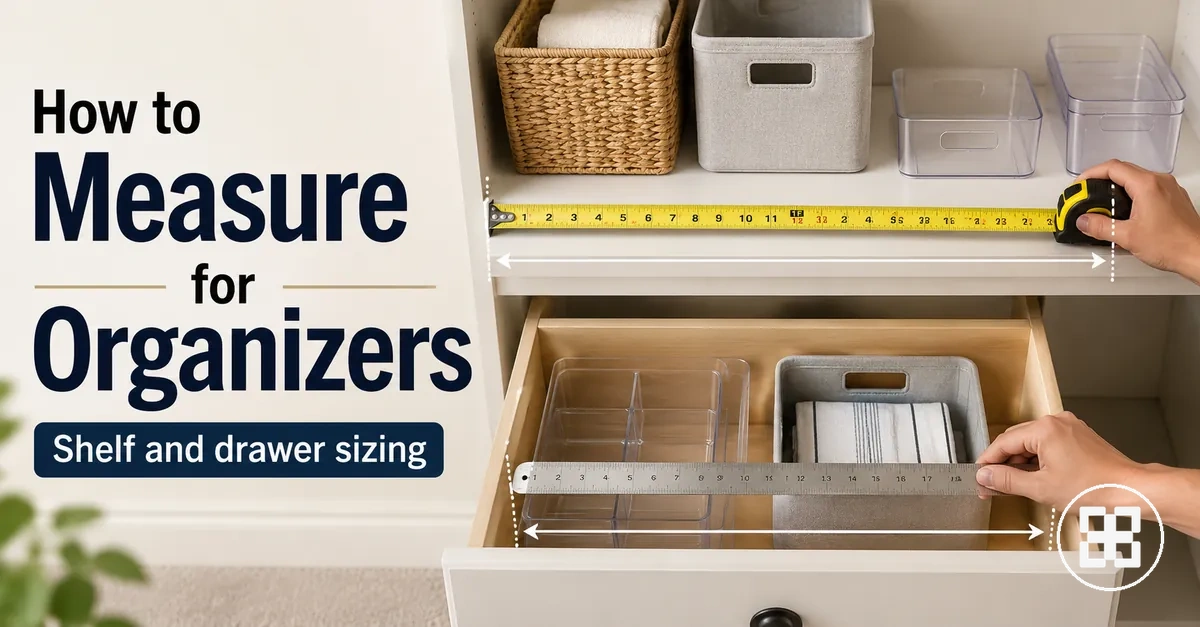
Measuring for Home Organization Product Fit
Home organization products fit a storage space when their product dimensions match the available width, depth, height, and clearance of the area where they will be used. Measuring before selection shows whether an organizer can enter the storage space, remain accessible, and provide usable capacity rather than only matching a labelled size. This measurement approach improves fit confidence before choosing storage products.
This measurement approach improves fit confidence before choosing storage products.
Poor measurements can leave unused gaps, block access, or create organizers that hold less than expected because the storage space and product dimensions do not align. Use a measuring tape to record width, depth, height, and clearance, while noting obstructions such as doors, hinges, pipes, or shelf supports. After the fit requirements are clear, the broader range of home organization products hub can be evaluated using those measurements.
Width, depth, height, outside footprint, and inside capacity describe different parts of the fit relationship.
Reliable organizer fit follows a sequence: measure the storage space first, measure the stored items that need to fit inside, then compare those details with the product dimensions. Width, depth, height, outside footprint, and inside capacity describe different parts of the fit relationship. For example, a container may match a shelf's width but still be difficult to use if its height prevents removal or its depth blocks access to items behind it.
A suitable organizer requires matching measured space conditions with product design rather than relying on a size label alone.
Measuring is the first step for choosing home organization products because fit depends on both the physical storage space and the design of the organizer. Width, depth, height, clearance, and access conditions provide the main sizing criteria, while features such as shape and internal capacity affect the final fit outcome. A suitable organizer requires matching measured space conditions with product design rather than relying on a size label alone.
Table of Contents
Organizer Fit Measurements That Matter
Organizer fit depends on matching the storage space, stored items, and product dimensions through a set of core measurements. The main measurements are opening size, internal width, usable depth, vertical clearance, item size, access path, and obstruction points because each one changes the possible fit outcome.
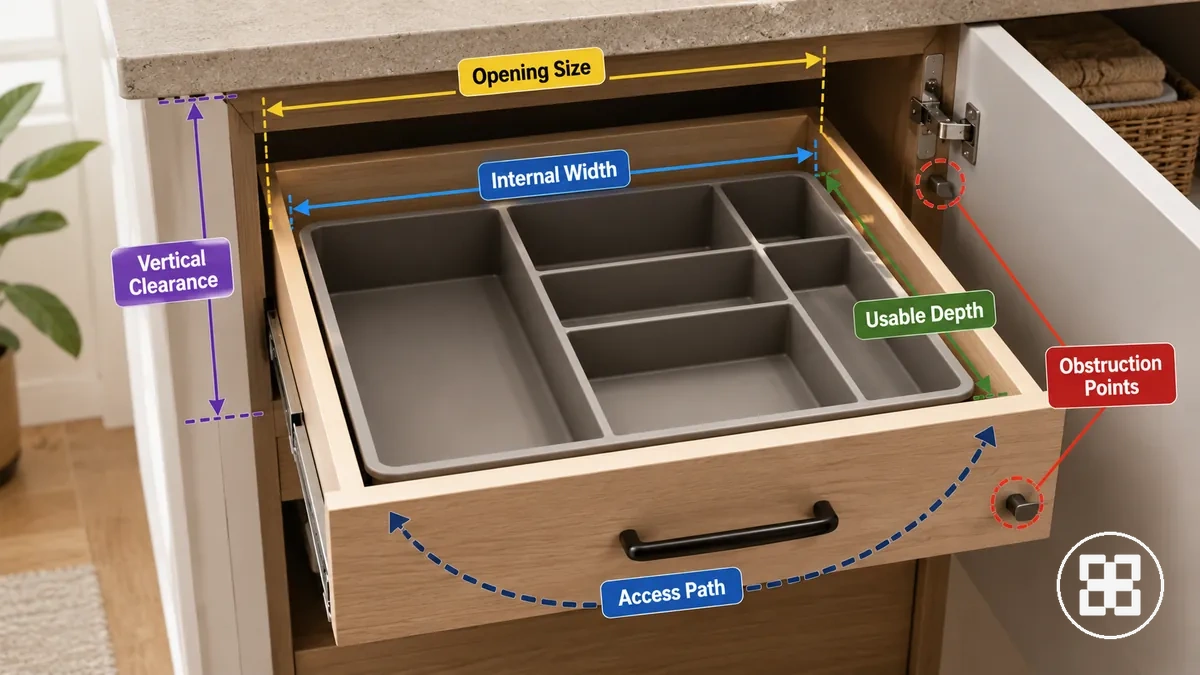
Each measurement connects a storage space or organizer part to a specific fit effect. Opening size controls entry into the storage area, internal width and usable depth define available space, vertical clearance limits placement, and obstruction points reduce usable access when barriers are present.
Each measurement connects a storage space or organizer part to a specific fit effect.
The measurement roles below separate space measurement, item measurement, and product measurement so each value can be checked against its purpose. Use the table to identify what each measurement controls, what to inspect, and the fit risk created when the measurement is overlooked.
| Measurement | What it controls | What to check | Fit risk |
|---|---|---|---|
| Opening size | Whether the organizer can enter the storage area | Storage opening width and height | The organizer may not pass through the available opening |
| Width | Side-to-side placement inside the storage space | Internal width of the drawer, shelf, cabinet, or other area | Excess width can prevent stable placement |
| Depth | Front-to-back usable storage space | Usable depth from the access point to the rear boundary | Excess depth can reduce access to stored items |
| Height | Vertical placement and clearance | Available vertical clearance around the organizer | Limited height can prevent proper placement or access |
| Clearance | Movement and access around the organizer | Gaps around doors, handles, lids, and nearby objects | Reduced clearance can make retrieval difficult |
| Obstruction points | Physical limits inside the storage area | Hinges, rails, supports, pipes, and other barriers | Obstructions can reduce the usable fit area |
For example, a container can match a shelf's internal width but still create a poor fit outcome if its depth blocks the access path or a door cannot open fully. The overlooked clearance gap changes the usable organizer size even though the main measurement appears correct.
Width, depth, height, and usable clearance
Width, depth, height, and usable clearance determine whether an organizer can enter, sit inside, open, and remain usable within a storage space. These physical measurements define how a drawer interior, shelf opening, or cabinet area limits organizer fit. Usable clearance is the practical limiter because it accounts for the remaining space after surrounding parts affect access.
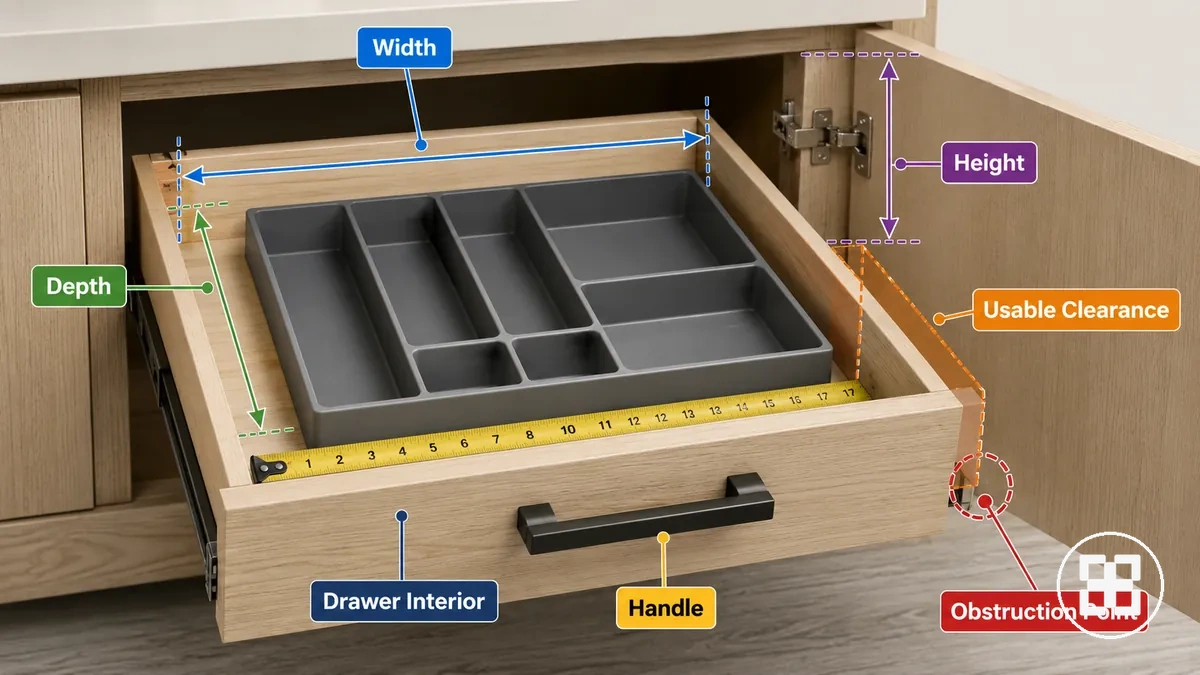
Width measures side-to-side space, depth measures front-to-back space, and height measures vertical space available for placement. Usable clearance describes the accessible gap remaining after cabinet doors, lids, handles, hinges, and overhangs are considered. For example, an organizer can match the measured width of a shelf but still become difficult to use if a handle reduces the opening clearance needed for removal.
- Width: Controls side-to-side placement inside the storage space. Check the opening width and side clearance to identify whether the organizer can sit without pressure against surrounding surfaces.
- Depth: Controls front-to-back placement. Check the back wall distance and front access area because excessive depth can limit access to stored items.
- Height: Controls vertical placement. Check the available vertical space around the organizer, including lid movement and shelf spacing, because limited height can restrict opening or removal.
- Usable clearance: Controls practical access after placement. Check the gaps around cabinet doors, handles, lids, hinges, and overhangs that can reduce movement space.
- Drawer interior and shelf opening: Define the actual measurement area used for fit checks rather than relying only on surrounding furniture dimensions.
- Obstruction points: Include parts such as hinges, handles, rails, and supports that can reduce usable fit even when the main width, depth, and height measurements appear suitable.
Inside dimensions versus outside dimensions
Inside dimensions and outside dimensions answer different fit questions for home organization products. Inside dimensions describe the internal capacity available for stored items, while outside dimensions describe the outside footprint required to place the organizer within a storage space. These two measurements show why a product label alone may not describe the final usable fit.
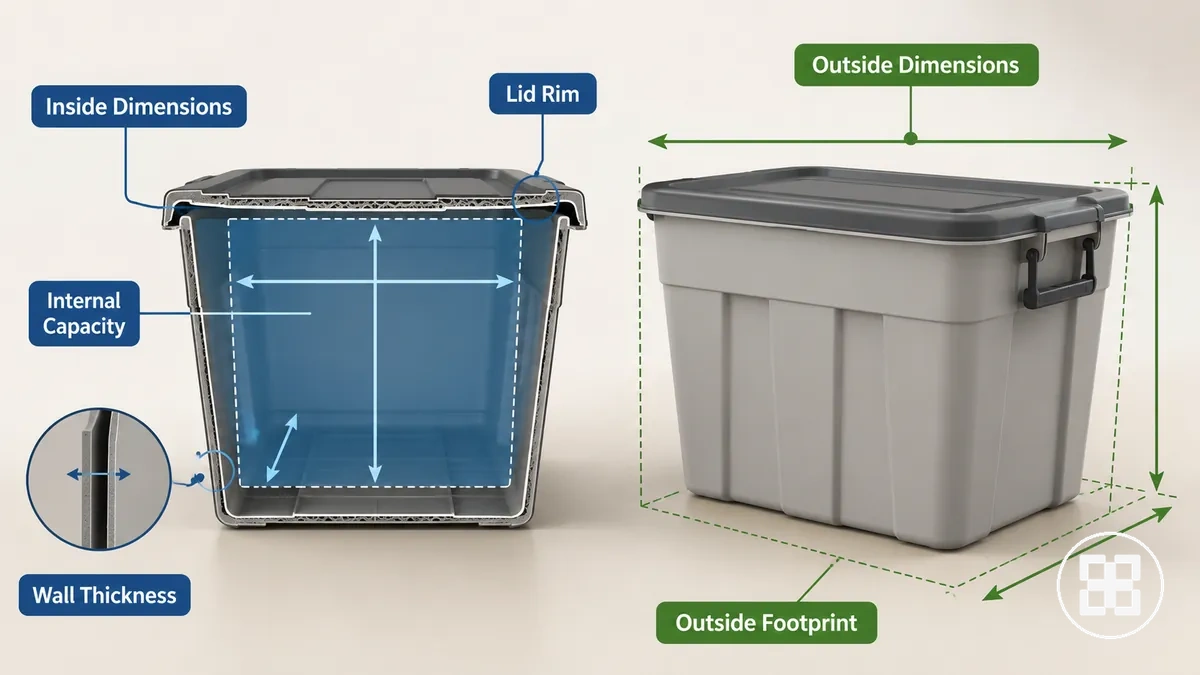
The outside footprint determines whether an organizer can occupy a shelf, drawer, or cabinet area, while internal capacity determines how much usable space remains for contents. Wall thickness, taper, lid rim, handles, and feet can reduce internal space even when the external size appears suitable. For example, a bin can physically fit on a shelf but hold fewer items than expected because thicker walls and tapered sides reduce the internal capacity.
The comparison below separates the two dimension types and shows how each one affects organizer fit.
The comparison below separates the two dimension types and shows how each one affects organizer fit.
| Dimension type | What it tells you | Fit implication |
|---|---|---|
| Inside dimensions | The internal capacity available for stored items | Shows the usable space for contents, grouping, and access |
| Outside dimensions | The outside footprint required by the organizer | Shows whether the organizer can fit within the available shelf, drawer, or cabinet space |
How to Measure Common Storage Spaces
Incorrect measurements can create organizers that block access, fail to enter a storage area, or leave unusable gaps. A shared measuring method solves this problem by checking each storage space through opening size, interior dimensions, usable clearance, and obstruction points before evaluating fit.
Incorrect measurements can create organizers that block access, fail to enter a storage area, or leave unusable gaps.
Use the same measuring process across common storage spaces, including drawers, shelves, cabinets, pantry areas, closets, and under-sink spaces. The steps below focus on the measurements needed to understand how a storage area can support an organizer without moving into room-based selection advice.
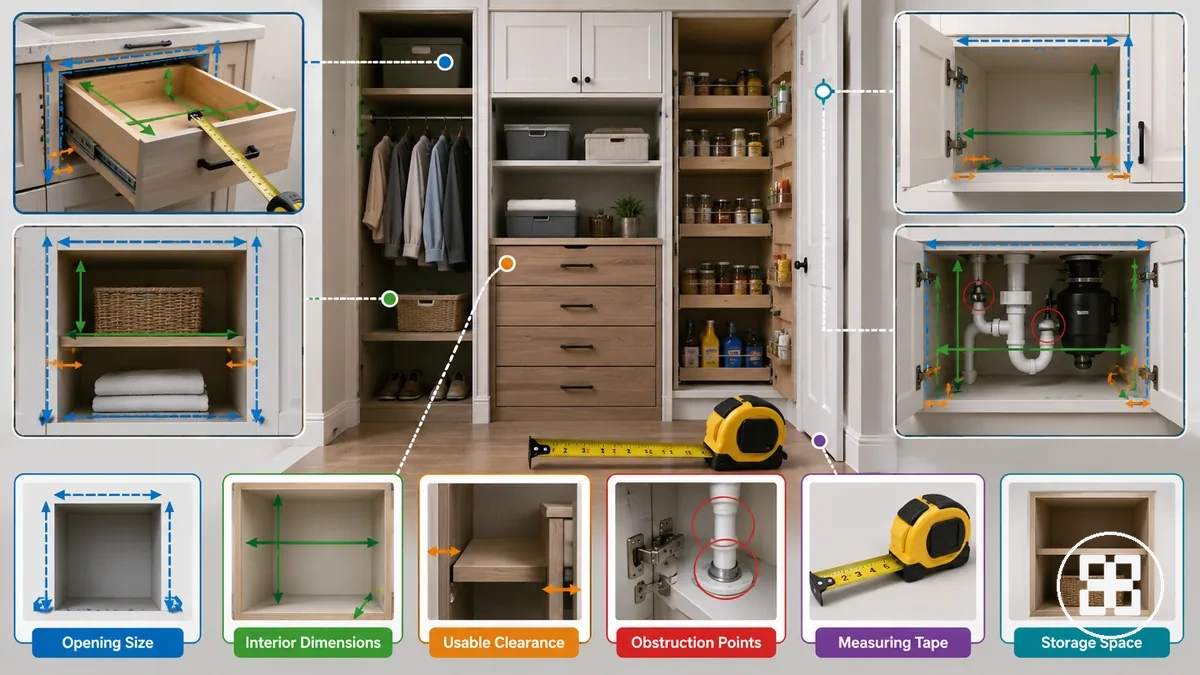
- Measure the opening size: Use a measuring tape to record the width and height of the entry point because the organizer must pass through this opening before placement.
- Measure interior dimensions: Record the usable width, depth, and height inside the drawer, shelf, cabinet, or other storage area because internal space determines where the organizer can sit.
- Check usable clearance: Measure the remaining gaps around doors, lids, handles, and moving parts because access depends on the space available after placement.
- Identify obstruction points: Record hinges, pipes, rods, rails, supports, and uneven boundaries because these features can reduce the available fit area.
- Take additional measurements for irregular spaces: Measure more than one point when storage areas have uneven shapes or fixed obstacles because a single centre reading may not represent the usable space.
Irregular or obstructed storage spaces require more than one measurement because the usable area can change across the same space. For example, under-sink spaces often contain pipes or valves that reduce available depth in specific areas, making obstruction-aware measurements necessary.
For guidance on matching organizers to different areas, see space-based organizer choices .
The shared measuring method establishes the storage conditions first, while broader space-based choices remain a separate step. For guidance on matching organizers to different areas, see space-based organizer choices.
Measuring drawers for inserts and dividers
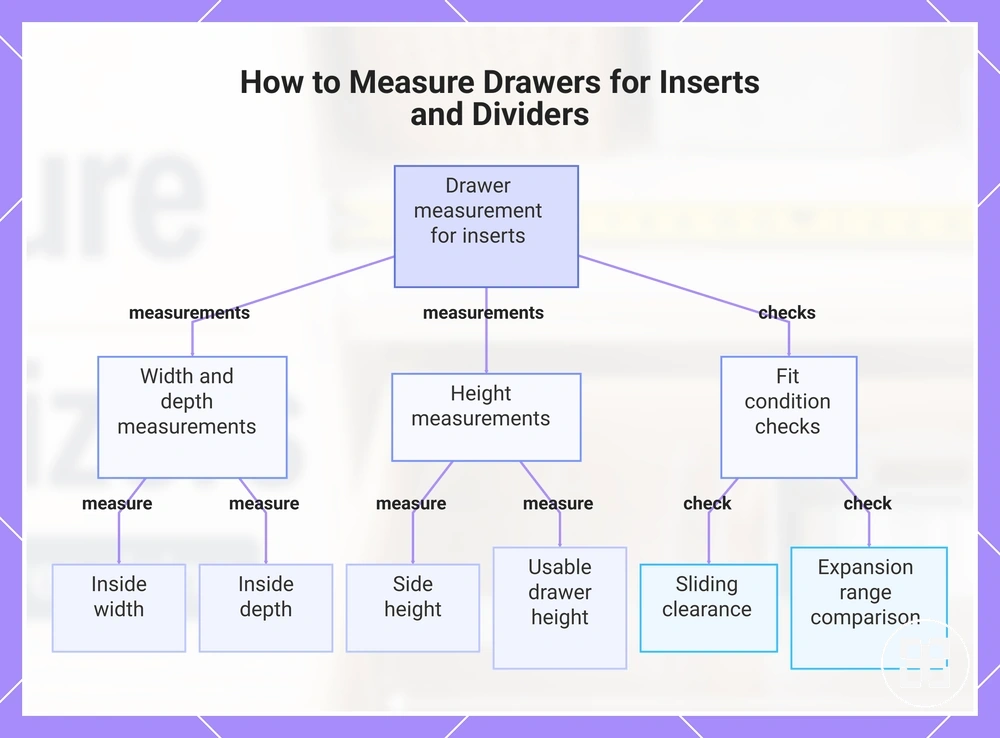
Drawer inserts and dividers fit when the drawer interior measurements match the space needed for placement, movement, and access. Measure the inside width, inside depth, side height, usable drawer height, and sliding clearance before fitting an insert or divider because these dimensions control how the organizer sits inside the drawer.
A shallow drawer can create a height limitation even when the inside width and inside depth appear suitable.
Small measurement issues can cause inserts to press against drawer sides, limit movement, or reduce usable space. Check the drawer components that affect fit conditions, including rounded corners, rails, liners, and the divider expansion range. A shallow drawer can create a height limitation even when the inside width and inside depth appear suitable.
- Inside width: Measure the side-to-side drawer interior space to check whether the insert or divider expansion range fits without excessive side pressure.
- Inside depth: Measure the front-to-back space from the drawer front to the drawer stop because depth determines available placement area.
- Side height: Measure the drawer wall height because inserts and dividers need sufficient support within the drawer interior.
- Usable drawer height: Measure the vertical space available above the drawer base because shallow drawers can limit organizer height.
- Sliding clearance: Check rails, liners, rounded corners, and other drawer parts that may reduce movement space during opening and closing.
- Expansion range: Compare the adjustable divider range with the measured inside width because expansion features must remain within the available drawer space.
This chart outlines the six essential measurements and checks for fitting drawer inserts, including width, depth, height, sliding clearance, and expansion range, helping to avoid common fit issues.
Measuring shelves, cabinets, and pantry areas
Shelf and cabinet fit requires measuring both the organizer footprint and the access space needed for placement and removal. Measure shelf width, shelf depth, and vertical spacing to define the available footprint, then check cabinet door swing, hinge intrusion, and reachable clearance to understand the practical access limits.
Vertical spacing determines whether pantry container height and lid movement allow easy placement and removal.
Shelf depth controls how far an organizer or pantry container can extend into the storage area, while shelf width controls side-to-side placement. Vertical spacing determines whether pantry container height and lid movement allow easy placement and removal. Cabinet door swing and hinge intrusion can reduce usable access even when the shelf dimensions appear suitable.
The table below separates the measured space component from the possible fit risk.
The table below separates the measured space component from the possible fit risk.
| Space part | Measurement | Fit risk |
|---|---|---|
| Shelf | Shelf width and shelf depth | A container can fit the shelf footprint but restrict access if container depth limits reach. |
| Cabinet | Cabinet interior width, depth, and cabinet door swing | Hinge intrusion or door movement can reduce the available access clearance. |
| Pantry shelf | Vertical spacing and pantry container height | A container may fit the shelf area but become difficult to remove if height or lid space is limited. |
| Storage access area | Reachable clearance around stored items | A stored item can remain physically present but become harder to retrieve. |
Measuring closets and under-sink spaces
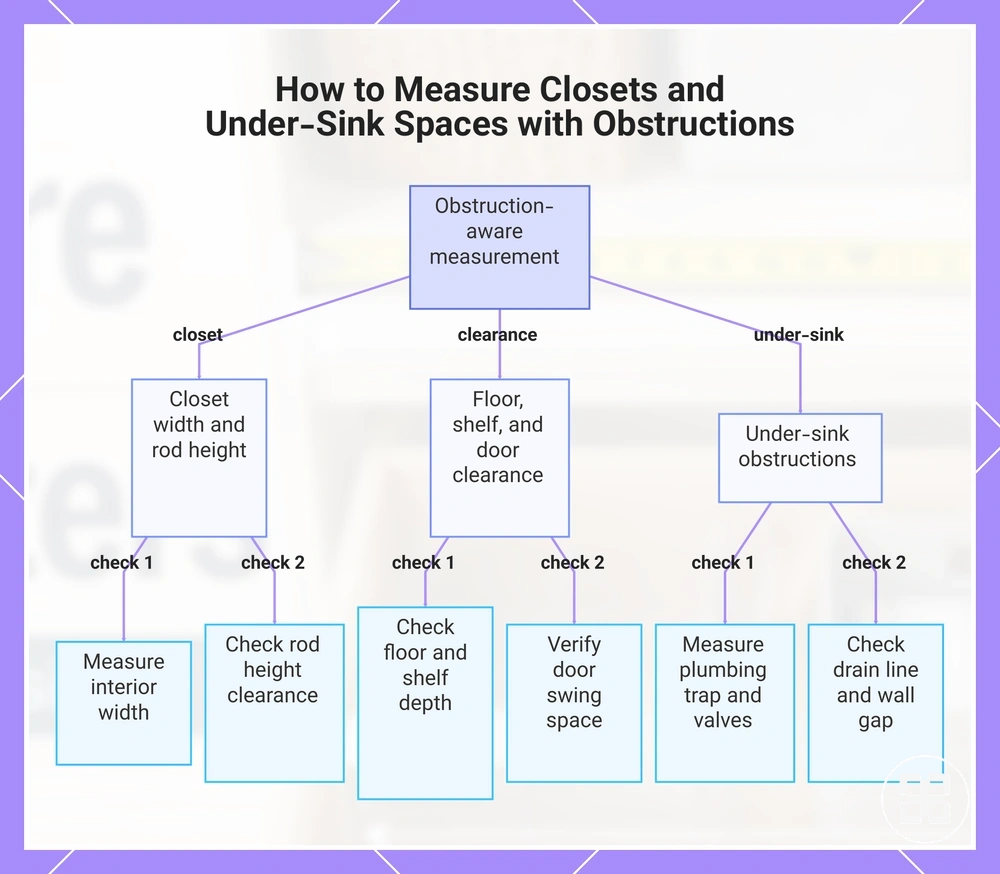
A closet with low hanging clearance or an under-sink space with fixed pipes needs obstruction-aware measurement rather than simple width and height checks. Measure around rods, plumbing parts, and uneven gaps to identify how much usable space remains for an organizer.
Obstructions change the available fit area even when the main storage dimensions appear suitable.
Obstructions change the available fit area even when the main storage dimensions appear suitable. Check each condition that can reduce placement or access space before measuring the final organizer area.
- Closet width: Measure the closet interior from side to side because shelves, walls, or stored boundaries can reduce the usable width.
- Rod height: Measure the distance below the rod because hanging clearance affects the available organizer height.
- Floor clearance: Measure the open space near the floor because uneven surfaces or low boundaries can limit placement.
- Shelf depth: Measure the front-to-back shelf space because depth affects how far an organizer can extend into the closet.
- Door clearance: Check the movement area around doors because door swing can reduce reachable clearance.
- Plumbing trap and valves: Measure around under-sink obstacles because pipe positions can reduce available sink cabinet space.
- Drain line and wall-to-pipe gap: Check the distance between plumbing parts and surrounding surfaces because uneven clearance changes the usable fit area.
This chart shows the key measurements needed to account for obstructions in closets and under-sink areas.
Measuring Stored Items Before Selecting Organizers
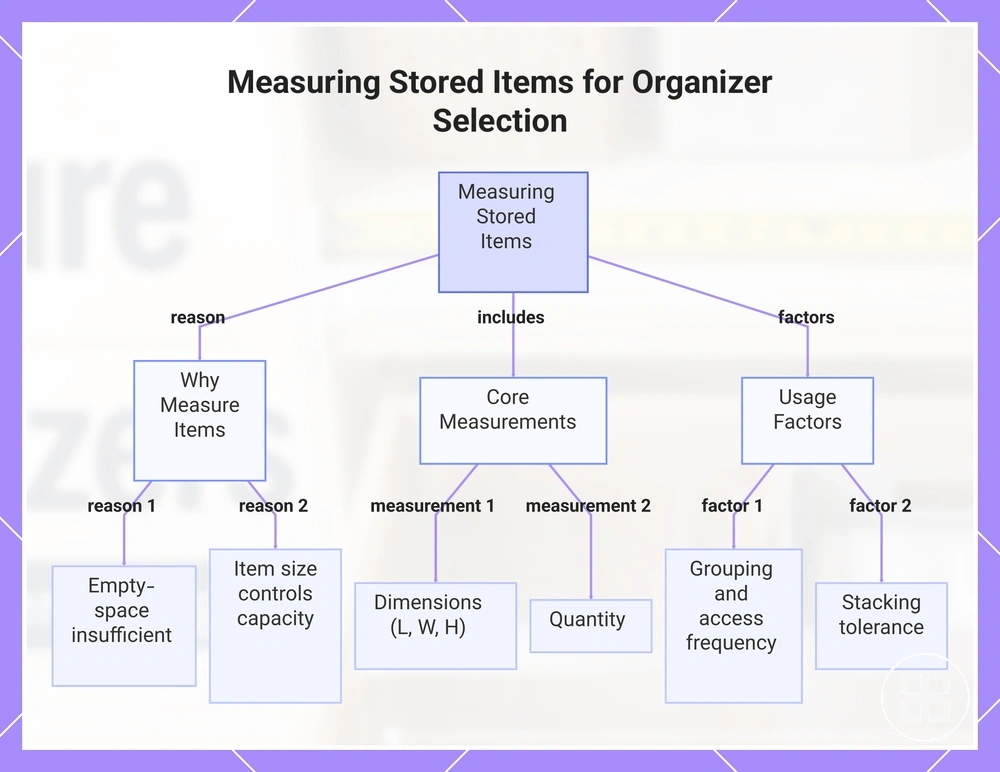
Stored items need to be measured before selecting organizers because empty-space measurements alone do not show the size and capacity required for actual contents. Measure item length, item width, and item height along with quantity and grouping needs to understand the organizer capacity required. Item size controls the usable organizer capacity needed for a practical fit.
Item size controls the usable organizer capacity needed for a practical fit.
Item grouping and access frequency affect organizer sizing because the same quantity of items may require different internal space depending on how they are used. Frequently accessed items may need more top clearance and spare clearance for retrieval, while grouped items may require separate compartments. Stacking tolerance also changes the required height because some item groups can share vertical space while others need individual placement.
Use the checklist below to connect stored item measurements with organizer sizing decisions.
Use the checklist below to connect stored item measurements with organizer sizing decisions.
- Item length: Measure the longest side of stored items because the organizer must provide enough internal space for the full length.
- Item width: Measure the side-to-side size of contents because width affects compartment size and available placement space.
- Item height: Measure vertical dimensions because container height and spare clearance must allow items to fit without pressure.
- Quantity: Count the number of similar items because the amount of contents affects the required usable capacity.
- Grouping: Identify related item groups because different groups may require different compartment sizes or spacing.
- Access frequency: Consider how often items are retrieved because frequent-use items may need additional top clearance for easier access.
- Stacking tolerance: Check whether items can be stacked because stacking ability changes the required organizer height and spare clearance.
This chart explains why measuring stored items is necessary and what measurements and usage factors to consider when choosing organizers.
How Product Dimensions Affect Real Fit
Product dimensions must be compared with measured space and stored items because listed sizes describe physical measurements rather than every condition that affects usable fit. Outside dimensions describe the external footprint, while inside capacity describes the usable volume available for contents. These listed dimensions and real-world conditions answer different fit questions.
Product shape changes how dimensions translate into practical use.
Product shape changes how dimensions translate into practical use. A taper can reduce inside capacity compared with outside dimensions, while lid height and handle projection can increase the clearance needed around an organizer. Divider range affects internal arrangement, and stacking load can influence stability and retrieval. Opening motion also affects whether access clearance remains usable after placement.
Opening motion also affects whether access clearance remains usable after placement.
The comparison below separates product features from the dimensions and conditions that influence practical fit.
| Product feature | Dimension to check | Fit effect | Decision signal |
|---|---|---|---|
| Taper | Outside dimensions and inside capacity | Angled sides can reduce usable capacity compared with the external footprint. | Compare internal space with stored items rather than relying only on external size. |
| Lid | Lid height and vertical clearance | A lid can increase the required height space above contents. | Check whether available height supports closing and access. |
| Handles | Handle projection and access clearance | Projecting handles can reduce surrounding clearance during placement or retrieval. | Measure space around areas needed for movement and removal. |
| Dividers | Divider range and internal width | Adjustable sections can change how usable capacity is distributed. | Match the divider range to the stored item grouping and available space. |
| Stacking | Stacking load and access clearance | Stacking conditions can affect stability and retrieval space. | Consider whether items remain accessible after stacking. |
| Opening motion | Movement path and surrounding clearance | Doors, drawers, or lids can restrict usable access after placement. | Check that the organizer can open and be reached in its final position. |
After product dimensions are compared with measured space and stored items, choosing after measuring becomes a criteria-based decision. A suitable fit requires matching listed dimensions with actual conditions, because product shape, access clearance, and stored items can change whether physical placement remains usable.
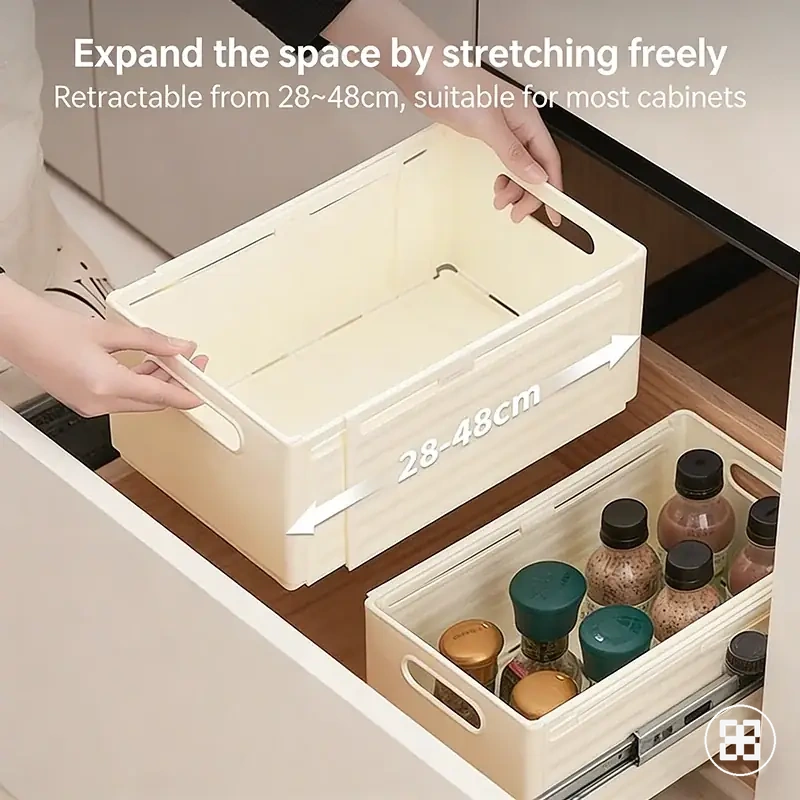
Adjustable and expandable organizer ranges
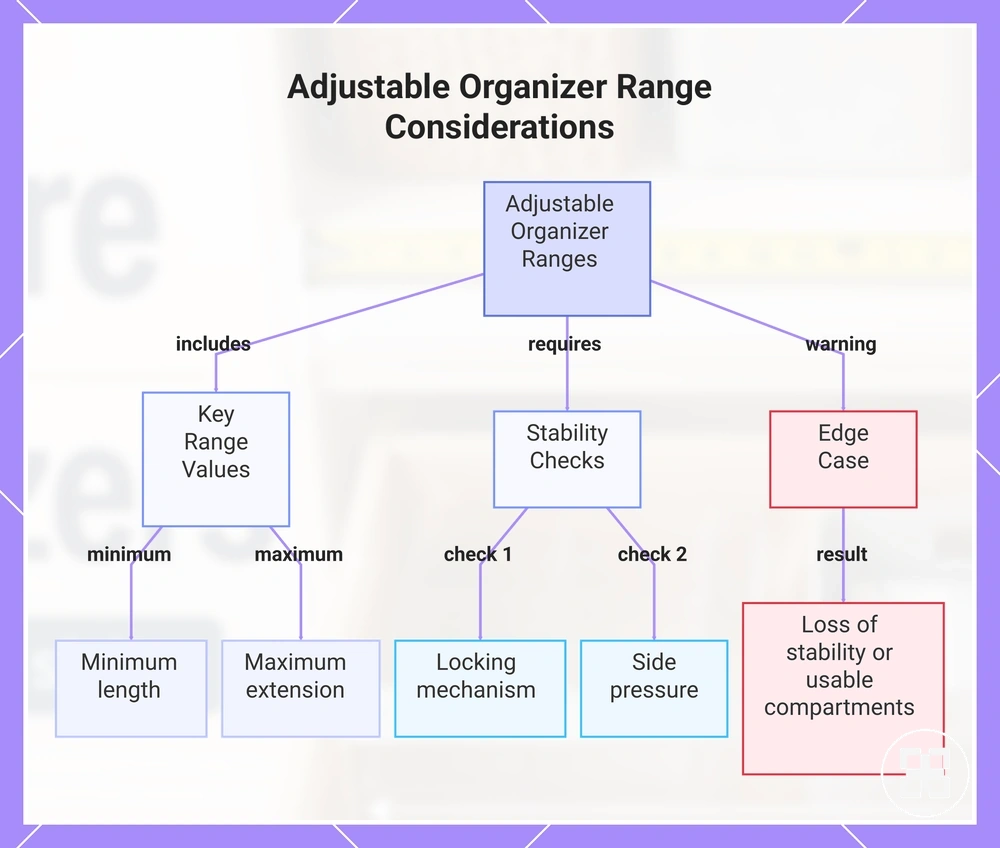
An adjustable organizer fits a measured space by matching its minimum length and maximum extension to the available area. Check the expandable range before placement because adjustable features change the fit range but do not remove the need to measure the space. The key range values are the minimum length and maximum extension.
The key range values are the minimum length and maximum extension.
Expansion range affects both usable space and stable fit after adjustment. Check the adjustment features and surrounding conditions before using the extended position.
- Minimum length: Compare the starting size with the measured space because the adjustable organizer must fit securely before expansion.
- Maximum extension: Check the expanded size because reaching the maximum extension can increase side pressure and affect stability.
- Locking mechanism: Check how the adjustment position is secured because movement can reduce a stable fit.
- Side pressure: Assess the contact pressure against surrounding surfaces because weak or excessive pressure can affect stability.
- Divider thickness: Measure the space used by dividers because thicker sections can reduce usable compartments.
- Required clearance: Check the remaining space around the adjusted organizer because limited clearance can affect access.
A practical edge case occurs when an adjustable organizer reaches the required width but loses stability or usable compartments because the extension leaves insufficient side support or reduces internal space.
This chart shows the key measurements, stability checks, and a practical edge case for adjustable organizer ranges.
This chart shows the key measurements, stability checks, and a practical edge case for adjustable organizer ranges.
Stackable box height, lids, and taper
Stackable box sizing depends on total stack height because the combined height of each box, lid, and required shelf gap determines whether the stack fits and remains accessible. Measure stackable box height together with surrounding clearance because a stack that fits on a shelf may not remain usable after stacking. Total stack height is the primary calculation for stacked fit.
Total stack height is the primary calculation for stacked fit.
Lid shape, taper, and nesting shape affect how storage boxes use available space after stacking. A lid rim can increase total height, while taper can reduce internal capacity compared with the outside shape. Handle clearance can affect retrieval space, and access frequency changes whether lower boxes remain practical to reach. Stacking stability should be considered as a fit condition rather than assumed from height alone.
Lid shape, taper, and nesting shape affect how storage boxes use available space after stacking.
The table below separates each stack factor from the measurement needed and its effect on practical fit.
| Stack factor | Measurement to take | Why it matters |
|---|---|---|
| Box height | Individual box height and total stacked height | Combined height determines whether the stack fits within the available shelf space. |
| Lid | Lid rim height and added vertical space | A lid rim can increase the total height required above stored contents. |
| Taper and nesting shape | Box shape and internal capacity | Taper and nesting shape can change usable space compared with the external footprint. |
| Handles | Handle clearance around stacked boxes | Handle position can affect retrieval space and movement around the stack. |
| Shelf gap | Available gap above and around the stacked boxes | A limited shelf gap can restrict access even when the stacked height fits. |
| Lower-box access | Access frequency and retrieval space | Frequently accessed lower boxes may require additional clearance for practical removal. |
Fit Checks Before Buying Home Organization Products
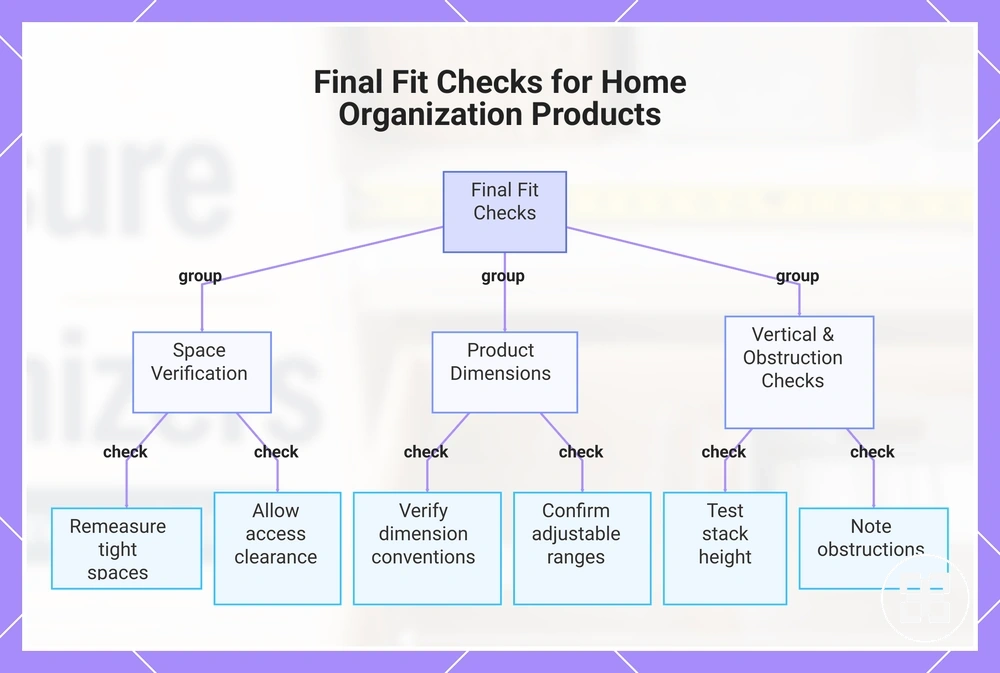
Final fit checks confirm that measured space, product dimensions, and stored-item conditions align before moving from sizing information to purchase-oriented evaluation. Remeasure tight spaces, verify dimension conventions, and review the remaining conditions that affect the final fit check.
Use this checklist to verify the conditions that can prevent measurement-to-purchase errors.
Use this checklist to verify the conditions that can prevent measurement-to-purchase errors.
- Remeasure tight spaces: Recheck narrow areas and obstructed spaces because small measurement changes can affect whether an organizer fits.
- Check dimension conventions: Confirm whether measurements refer to outside dimensions or inside capacity because different conventions change the available fit information.
- Allow access clearance: Verify remaining movement space because an organizer that fits physically may still restrict retrieval.
- Confirm adjustable ranges: Check the available adjustment range because the organizer must match the measured space before expansion or reduction.
- Test stack height: Review the combined stack height because stacked storage requires enough space for practical access.
- Note obstructions: Record fixed barriers because obstructions can reduce the usable area available for placement.
- Compare final options: Choose a smaller size when space is limited, an adjustable option when the measured range supports adjustment, or a different organizer type when the fit conditions do not align.
These final checks create a safer decision process by verifying space, product, and stored-item conditions together. The buying checklist measurements provides a structured measurement review before completing the evaluation.
The buying checklist measurements provides a structured measurement review before completing the evaluation.
The final decision depends on the verified fit conditions: a smaller size, adjustable option, or different organizer type may suit the measured space and stored items differently.
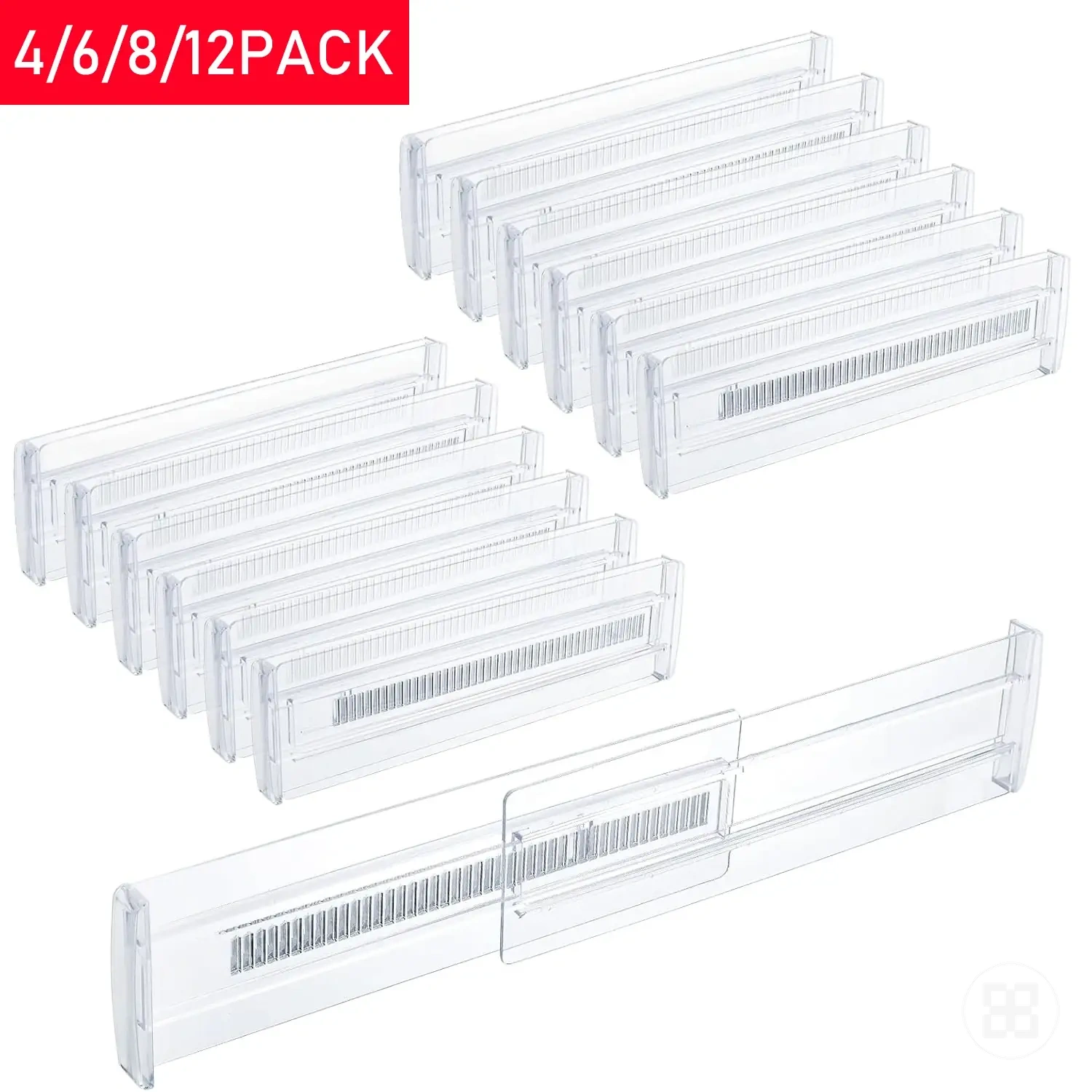
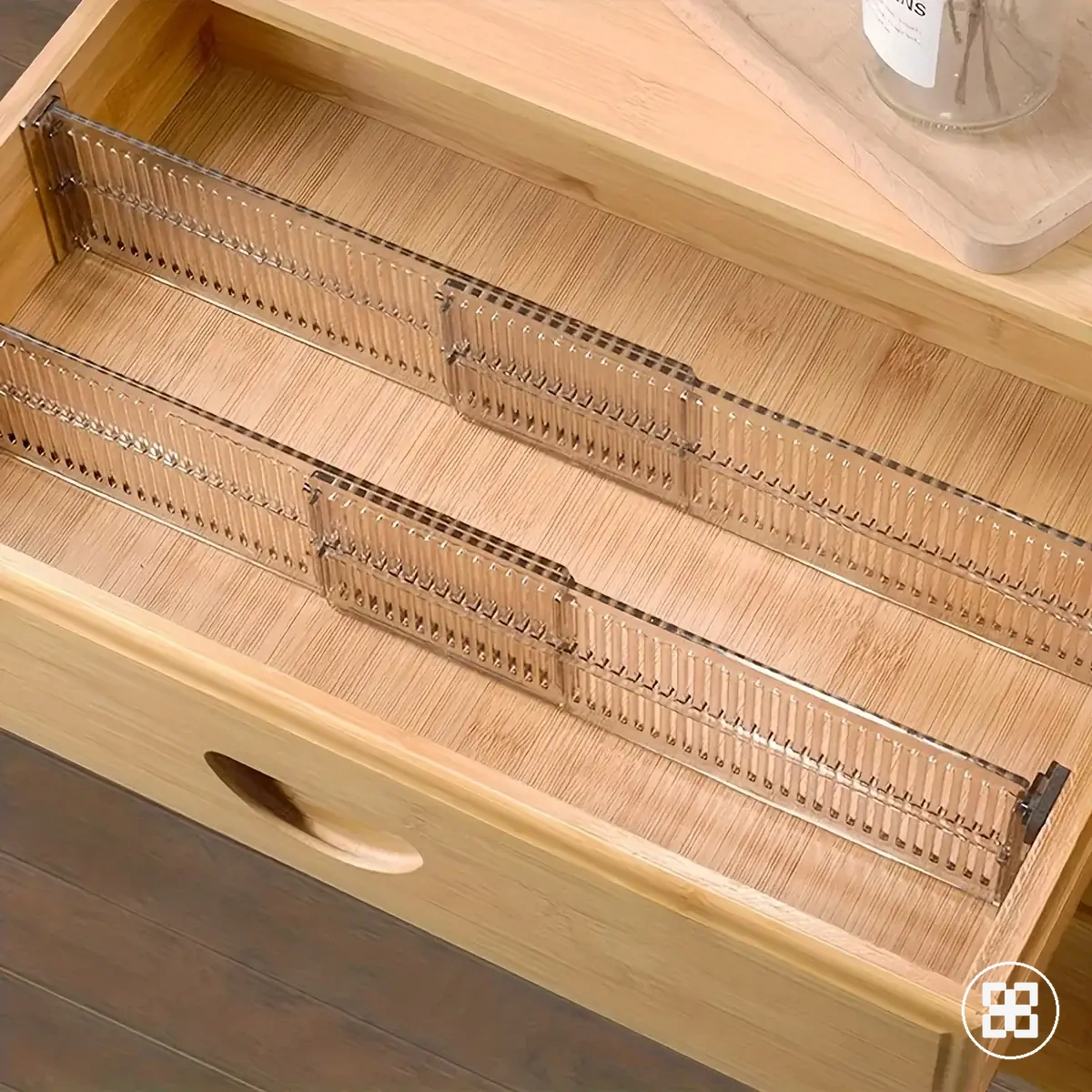
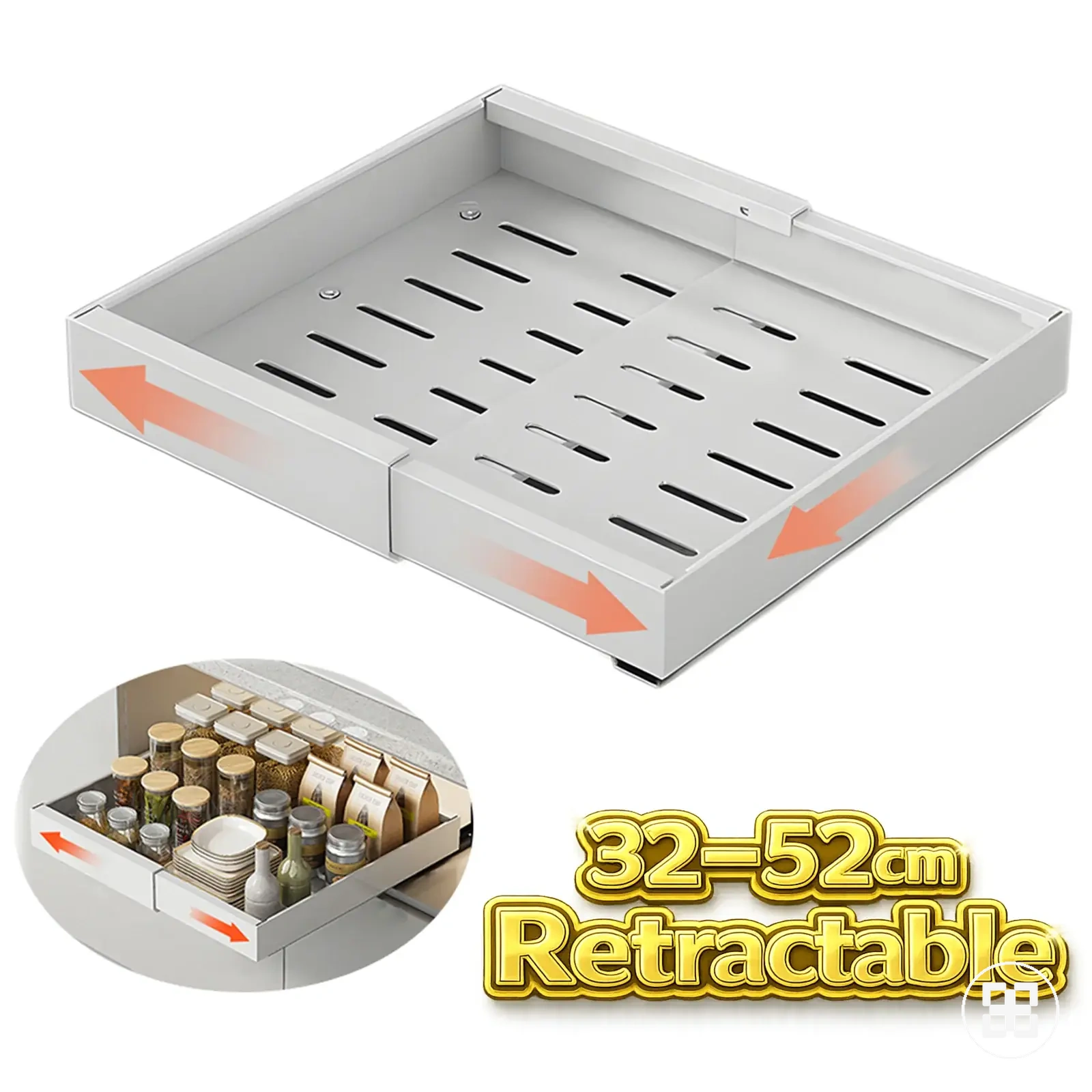
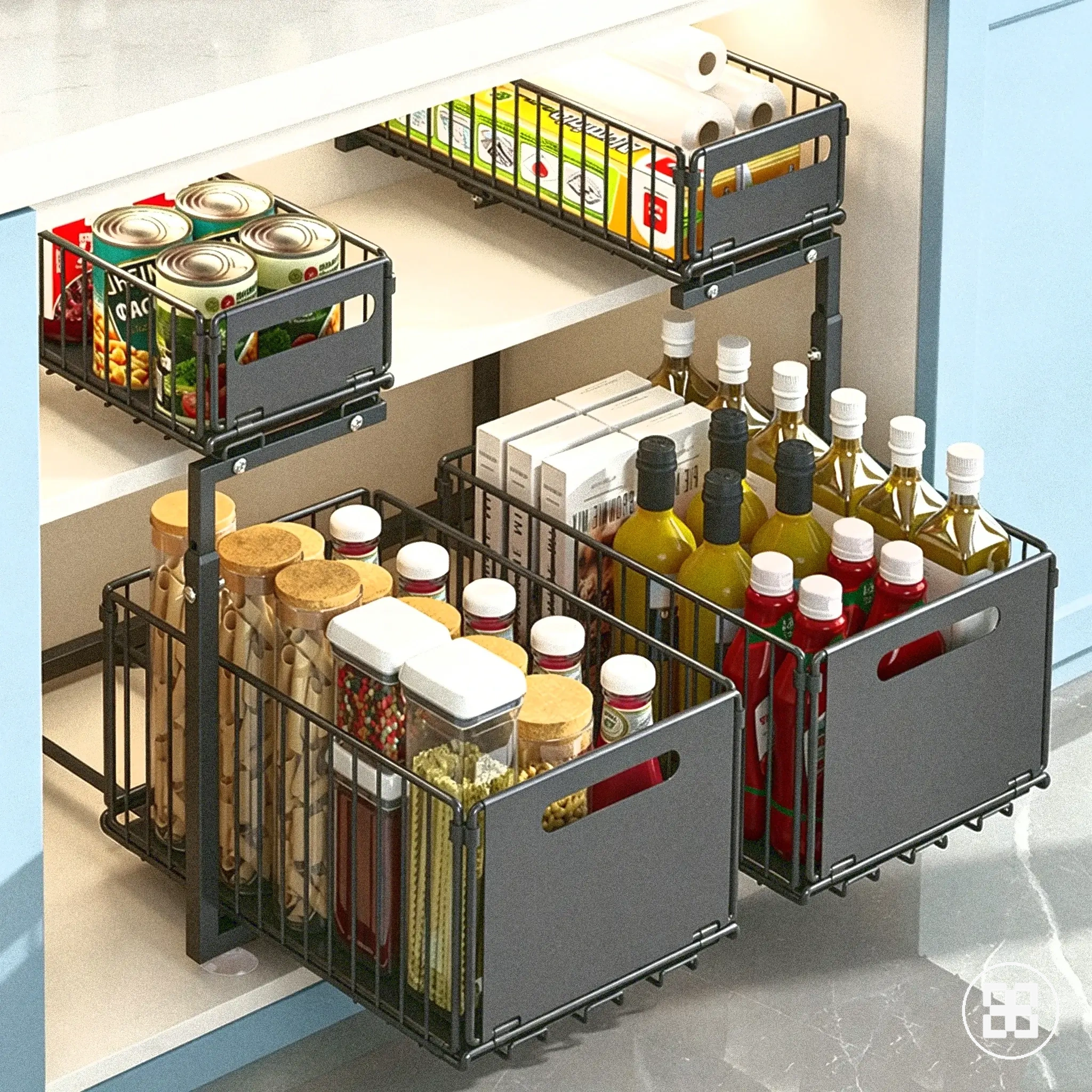
Here are product examples that may make comparison easier.
Here are product examples that may make comparison easier. Before buying, always review the compatibility criteria, essential features, and product details.
This chart shows the three main categories of final fit verification and the specific checks to perform before purchasing a home organizer.
Common Measuring Mistakes That Cause Poor Fit
Poor fit often occurs when measuring mistakes overlook usable-space conditions, even when the listed size appears correct. Measurement errors usually come from checking only one dimension instead of the complete fit condition, including shape, clearance, and stored items. Most mistakes come from missed usable-space conditions rather than incorrect arithmetic alone.
Most mistakes come from missed usable-space conditions rather than incorrect arithmetic alone.
Use the diagnostic checks below to identify common fit errors and the corrected measurement action.
| Mistake | What it misses | Correct check |
|---|---|---|
| Measuring only the opening size | Usable clearance inside the storage space | Measure the interior area and access space instead of only the entry opening. |
| Ignoring taper | Reduced internal capacity caused by angled sides | Check the inside capacity against the stored items before selecting an organizer. |
| Forgetting lid height or handle height | Additional vertical and side clearance requirements | Include lid height and handle height when checking the final fit area. |
| Overlooking pipes or hinges | Obstructions that reduce usable space | Measure around pipes, hinges, and other fixed barriers before finalising fit. |
| Buying before measuring stored items | Actual item size, quantity, and organizer capacity needs | Measure stored items before matching organizer dimensions. |
| Assuming standard sizes apply | Differences between listed sizes and real conditions | Remeasure the specific space because standard sizes may not match the available fit. |
Corrected measurement behaviour focuses on the missed condition rather than repeating every earlier measurement step. Check opening size, taper, lid height, handle height, obstructions, and stored items together to reduce poor fit. For broader coverage of related issues, see avoid common fit mistakes when reviewing additional fit-related problems.