
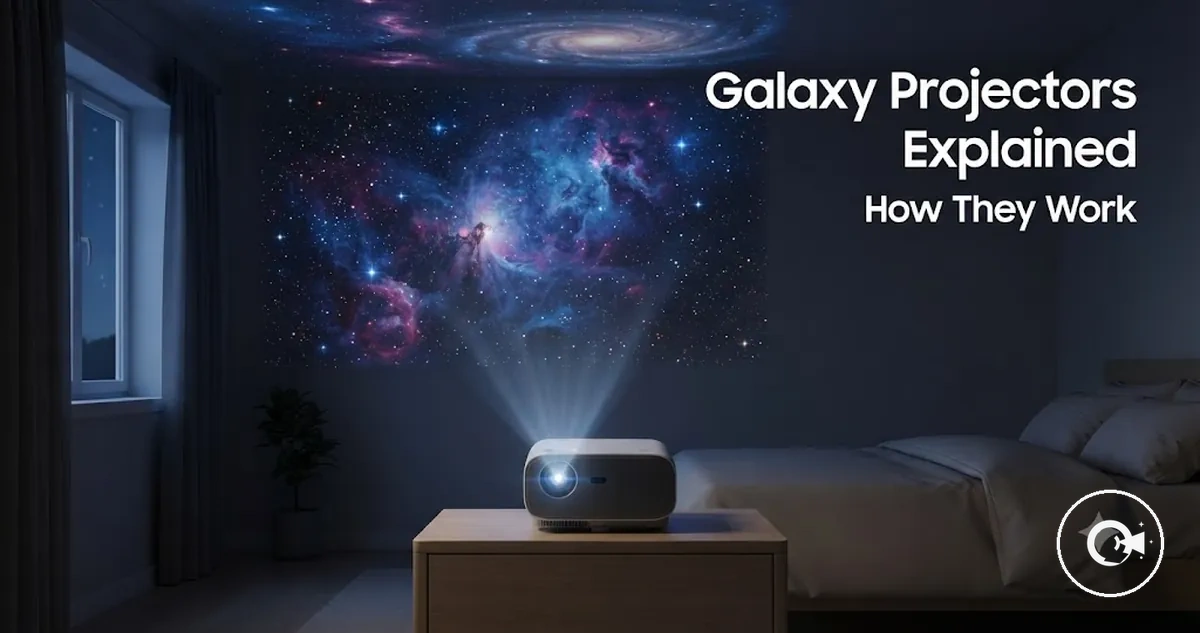
What Are Galaxy Projectors and How They Work
A galaxy projector is a decorative light projection device that creates a celestial display on a wall, ceiling, or other projection surface. A galaxy projector may project stars, nebula-like patterns, or a combination of both. A space projector or star projector belongs to the same general category, although the visual emphasis can vary by design.
A galaxy projector uses a light source and optical elements to project visible patterns onto a nearby surface. The projector may create separate star points, flowing nebula effects, or layered light effects that form a broader visual display. Movement can be produced when internal projection elements rotate or shift the projected pattern. Colour, brightness, motion, and coverage can vary depending on the projector design and the surrounding environment. The resulting scene is a simulated decorative effect rather than a scientific representation of the night sky.
This general operating concept provides the foundation for understanding how a galaxy projector creates a celestial display through light projection. The following sections explore the underlying projection mechanism and the relationship between light sources, optical components, and the visual effects they produce.
Galaxy Projectors as Devices That Create Celestial Light Displays
A galaxy projector is a device that creates a projected display of decorative celestial-style light patterns on a wall, ceiling, or other projection surface. A galaxy projector uses LED light and optical projection elements to display star patterns, nebula patterns, or a combination of both. The projected display is intended to create an ambient visual effect rather than reproduce a scientifically accurate view of the night sky.
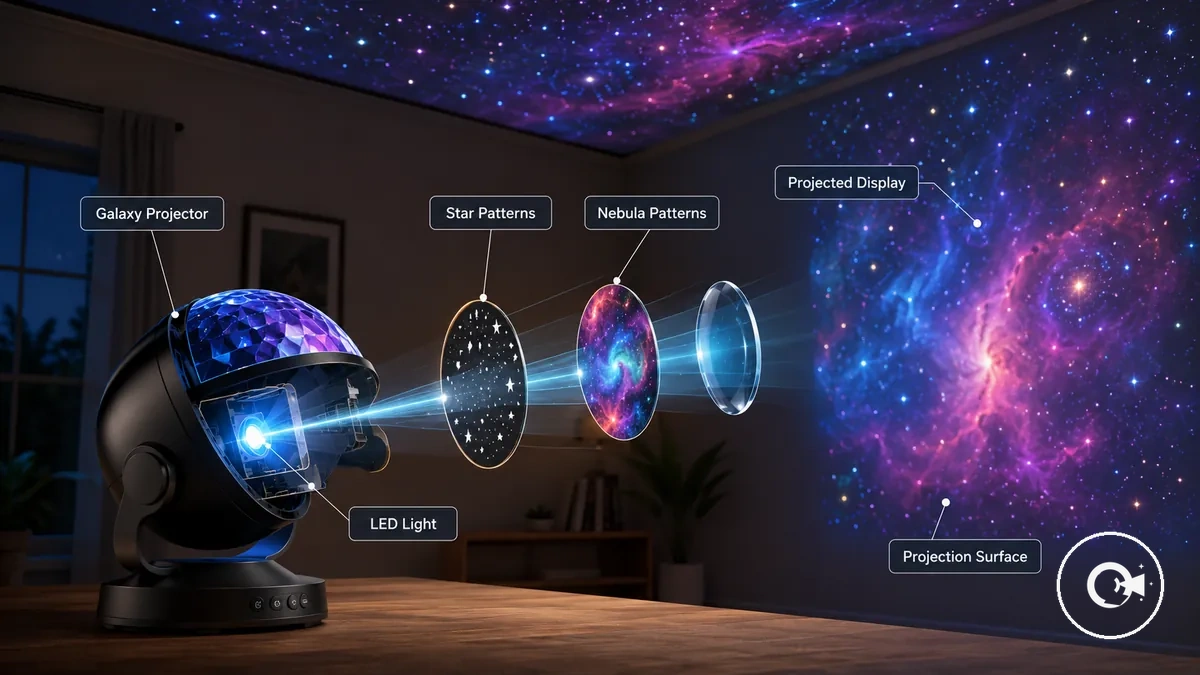
The projected display is formed by directing LED light through optical components toward a projection surface. These light paths can create stars, coloured nebula patterns, layered light effects, and, depending on the device design, gentle motion or changing colours. The appearance of the projected display can vary according to the optical system, light source, and viewing environment.
A galaxy projector belongs to the category of decorative light projection devices and differs from specialized astronomical projection systems, which are designed for educational or scientific representation. This distinction helps place the device within the broader Galaxy Projectors category while keeping its primary purpose focused on immersive celestial-style light displays.
How Galaxy Projectors Produce Stars, Nebulae, and Moving Light Effects
Galaxy projector projection technology uses a light source and optical elements to create simulated stars, nebula, and moving light effects on a projection surface. Rather than displaying real astronomical objects, the projection technology shapes and directs light into decorative patterns that resemble a celestial scene. Although the underlying design can vary between devices, the visible result typically comes from the interaction between light generation, optical projection, and the projection surface.
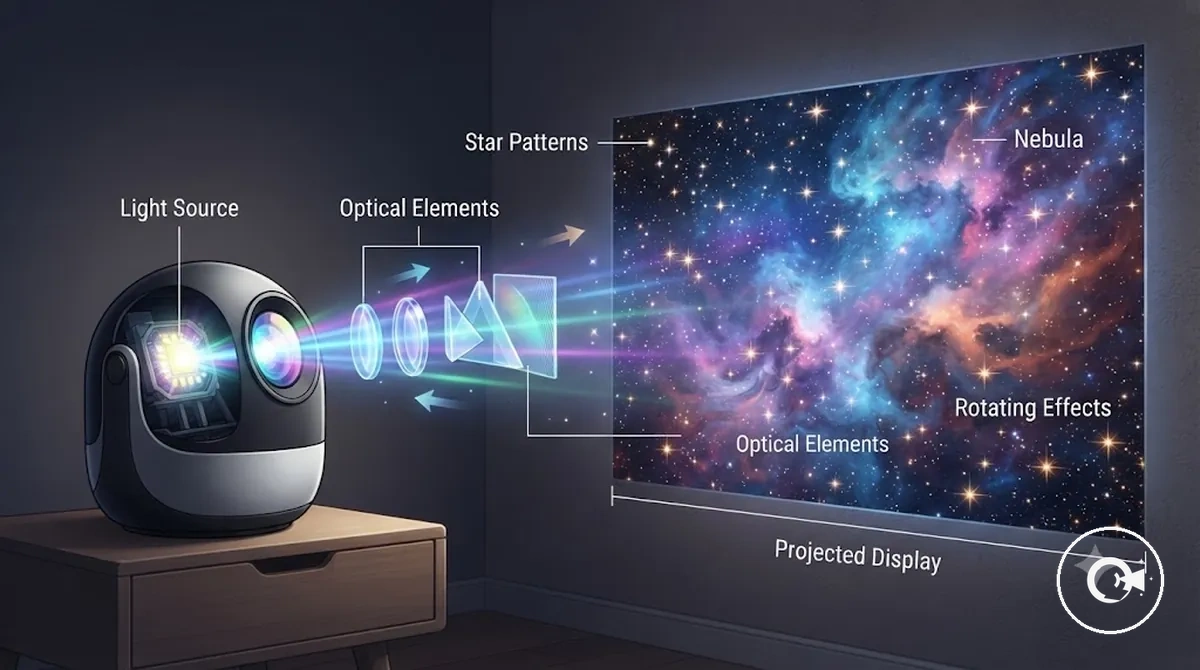
The light source provides the illumination, while optical elements modify and distribute the light to create projected patterns. Different projection elements may generate star fields, diffuse nebula effects, or layered colour effects that combine into a single projected display. Rotating effects can be produced when internal projection components move or change the projected pattern over time, creating the appearance of gradual motion.
Projection technology can vary in how it produces colour, motion, and image detail, so not every galaxy projector uses the same internal mechanism. The appearance of the projected stars, nebula, and moving light effects therefore depends on the combination of the light source, optical elements, and projection design.
These projected scenes are decorative simulations of celestial views rather than scientifically accurate representations of the night sky, helping distinguish ambient light effects from astronomical imaging systems.
The Optical Components and Light Sources Inside Galaxy Projectors
The internal components of a galaxy projector work together to generate, shape, and project light into a decorative celestial display. Each component performs a specific function, and the appearance of stars, colour, motion, and image clarity depends on how the light source and optical system interact rather than on any single part.
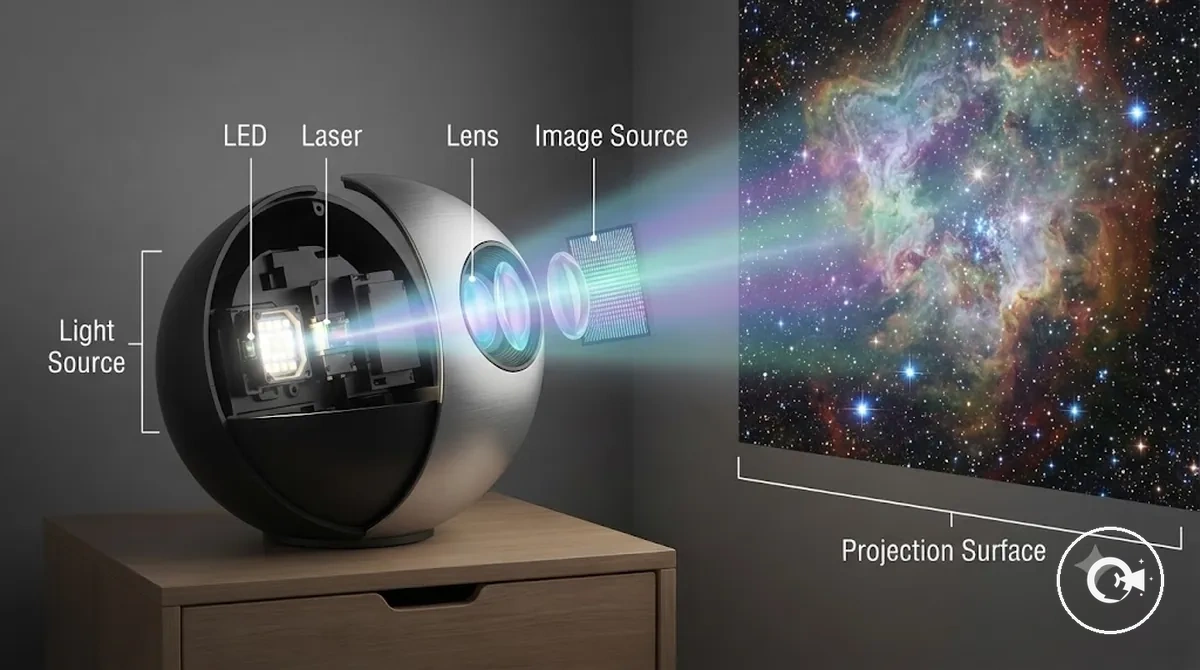
The main components typically include:
- LED: A light source that provides illumination for projected stars, nebula effects, or coloured light patterns.
- Laser: A light source that may create fine star-like points or other focused projection effects, depending on the projector design.
- Lens: An optical element that shapes, focuses, and directs light, influencing the size, sharpness, and distribution of the projected image.
- Projection surface: The wall, ceiling, or other surface where the projected image becomes visible, with the final appearance depending partly on the viewing environment.
- Image source: Internal projection elements that help form star fields, nebula patterns, or other decorative light effects before projection.
Each component contributes a different attribute to the projected result. The light source controls illumination, the lens shapes the image, and the projection surface influences how the display is perceived. Depending on the internal design, these components may also affect colour blending, motion, and image characteristics without implying identical performance across all galaxy projectors.
LEDs, lasers, lenses, image sources, and the projection surface function as an integrated optical system rather than as isolated parts. Their combined relationship shapes the final projected display and helps explain why different projector designs can create different visual characteristics while using the same general projection principles.
How Galaxy Projector Technology Creates Different Projection Effects
Galaxy projector technology creates different projection effects by changing how light is generated, shaped, and displayed. The resulting visual patterns, including star fields, nebula visuals, colour modes, motion, and brightness, depend on the projection design, configuration, and viewing environment rather than on a single technology.
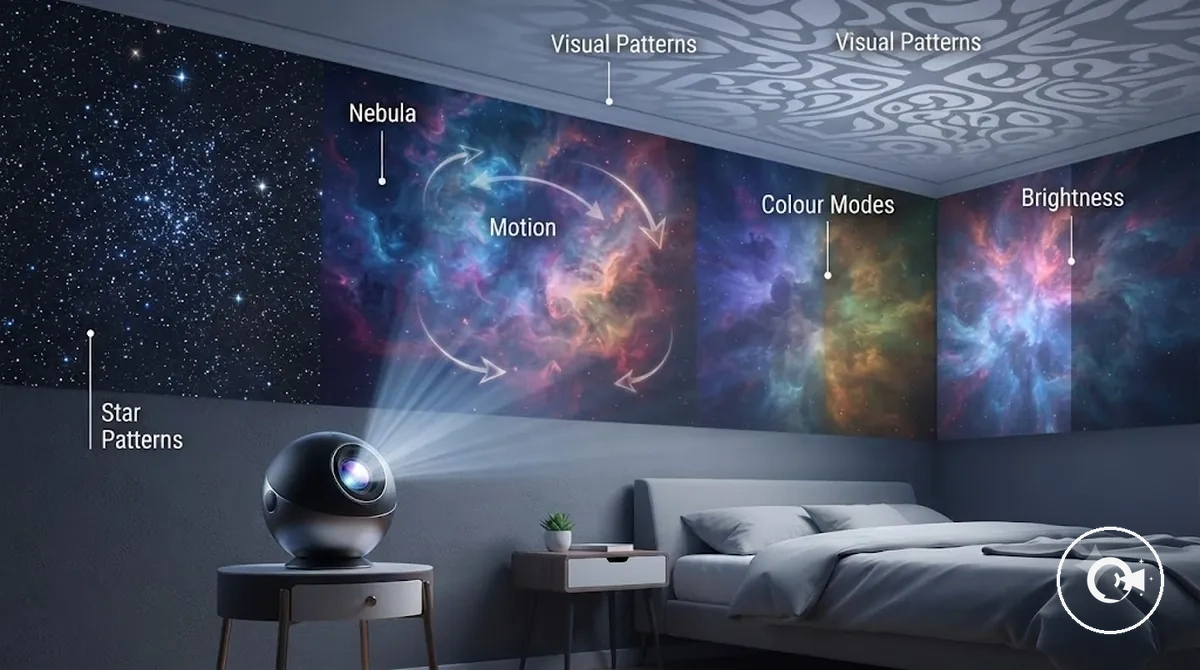
Common projection effects may include:
- Star patterns: Projection technology can create scattered points of light that resemble a star-filled sky.
- Nebula visuals: Colour blending can produce cloud-like visual patterns that add depth to the projected display.
- Motion: Moving projection effects may gradually shift star fields or nebula patterns to create a dynamic visual scene.
- Colour modes: Different colour modes can change the appearance and atmosphere of the projected image.
- Brightness: Brightness control may influence how clearly visual patterns appear under different lighting conditions.
Projection technology affects how these visual patterns are created, but the final outcome depends on the interaction between colour modes, brightness, motion, projection design, and the surrounding environment. Because these conditions vary between devices and usage settings, projection effects can differ without indicating that one technology consistently creates the same visual result.
Star Projection and Galaxy Projection Differences
Star projection and galaxy projection differ mainly in their visual emphasis. A star projector typically emphasizes star patterns, while galaxy projection generally combines star patterns with a nebula effect and, in some designs, motion. Consumer terminology may overlap, so these terms often describe the visual approach rather than defining separate product categories.
The following comparison organizes visual characteristics rather than comparing products.
| Projection Type | Main Visual Attribute | Typical Effect | Distinguishing Characteristic |
|---|---|---|---|
| Star projection | Star patterns | Creates a night-sky appearance with projected points of light | Emphasizes individual star-like visuals |
| Galaxy projection | Star patterns with nebula effect | Combines coloured cloud-like visuals with stars and may include motion | Emphasizes layered celestial-style projection effects |
The visual difference is based on projection style and visual emphasis rather than a strict separation between devices. A star projector may also include a nebula effect, while a galaxy projection may prominently display star patterns. Because consumer terminology often overlaps, the product name alone does not necessarily indicate the exact visual characteristics of the projected display.